Boater (Summer Readings - 8)
Summer is finally here, and nothing quite beats finding a cool and last spot (preferably in the dappled shade of a willow tree or two) and idling away a few hours while losing yourself in a captivating book. Why not wrap up your evening with us tonight for this year’s review and recommendation for your Summer Reading? Join us as we explore a wonderful book that gently carries you along England’s peaceful (and not so peaceful) waterways while drifting through centuries of hist...

 Apple Podcasts
 Spotify
 Amazon Music
 Castbox
 Podchaser
 iHeartRadio
 PlayerFM
 Goodpods
 TuneIn
 Podcast Addict
 Castro
 PocketCasts
 RSS Feed
 YouTube
 Summer is finally here, and nothing quite beats finding a cool and last spot (preferably in the dappled shade of a willow tree or two) and idling away a few hours while losing yourself in a captivating book.
Why not wrap up your evening with us tonight for this year’s review and recommendation for your Summer Reading? Join us as we explore a wonderful book that gently carries you along England’s peaceful (and not so peaceful) waterways while drifting through centuries of history: the poet and archaeologist, Jo Bell’s Boater.
Episode Information:
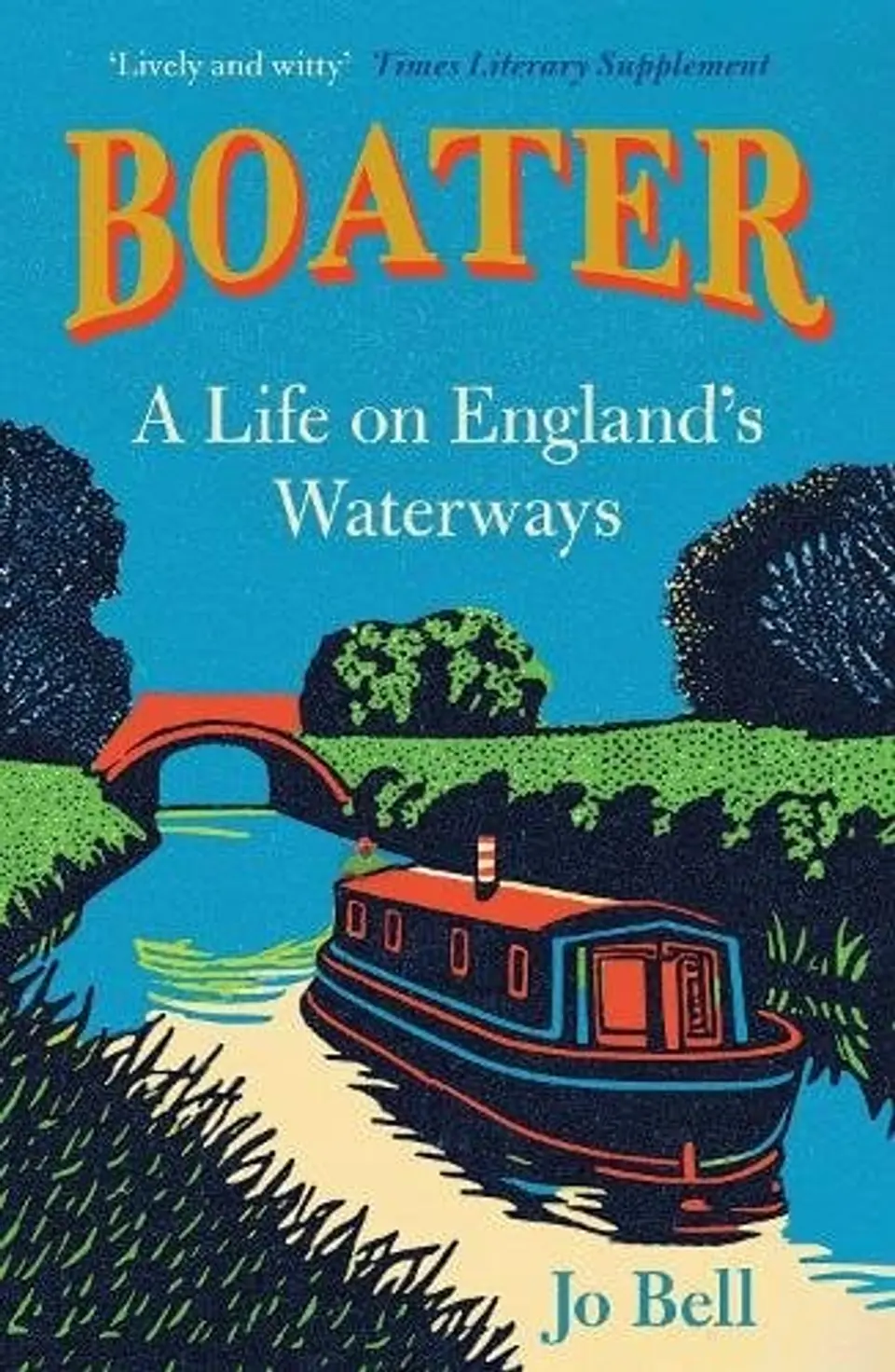
This episode of Summer Readings features Boater: A life on England's waterways by Jo Bell and published in 2025 by HarperCollins.
With special thanks to our lock-wheelersfor supporting this podcast.
Ana McKellar
Susan Baker
Mind Shambles
Clare Hollingsworth
Kevin B.
Fleur and David Mcloughlin
Lois Raphael
Tania Yorgey
Andrea Hansen
Chris Hinds
Chris and Alan on NB Land of Green Ginger
Captain Arlo
Rebecca Russell
Allison on the narrowboat Mukka
Derek and Pauline Watts
Anna V.
Orange Cookie
Mary Keane.
Tony Rutherford.
Arabella Holzapfel.
Rory with MJ and Kayla.
Narrowboat Precious Jet.
Linda Reynolds Burkins.
Richard Noble.
Carol Ferguson.
Tracie Thomas
Mark and Tricia Stowe
Madeleine Smith
General Details
The intro and the outro music is ‘Crying Cello’ by Oleksii_Kalyna (2024) licensed for free-use by Pixabay (189988).
Narrowboat engine recorded by 'James2nd' on the River Weaver, Cheshire. Uploaded to Freesound.org on 23rd June 2018. Creative Commons Licence.
Piano and keyboard interludes composed and performed by Helen Ingram.
All other audio recorded on site.
Become a 'Lock-Wheeler'
Would you like to support this podcast by becoming a 'lock-wheeler' for Nighttime on Still Waters? Find out more: 'Lock-wheeling' for Nighttime on Still Waters.
Contact
- Facebook at https://www.facebook.com/noswpod
- Instagram: https://www.instagram.com/nighttimeonstillwaters/
- Bluesky: https://bsky.app/profile/noswpod.bsky.social
- Mastodon: https://mastodon.world/@nosw
I would love to hear from you. You can email me at nighttimeonstillwaters@gmail.com or drop me a line by going to the nowspod website and using either the contact form or, if you prefer, record your message by clicking on the microphone icon.
For more information about Nighttime on Still Waters
You can find more information and photographs about the podcasts and life aboard the Erica on our website at noswpod.com.
Summer Readings 8: Boater by Jo Bell
[READING]
So ends the book I have chosen for this year's Summer Reading suggestion.
It is from, Boater: A life on England’s waterways, by Jo Bell and published in 2025 by Harper Collins. It is one, I think, that will appeal to anyone interested in canals, canal-life, history and/or the diversity and complexities of human relationships. I realise that I have actually referred to Jo and her book in an earlier episode this year (‘Finding Erica’), but think that it deserves a little more of the spotlight. Jo is a trained archaeologist and a poet. In fact, she was the inaugural Poet Laurette for the Canal and River Trust and Poetry Society from 2013-2015. This combination of a poet’s eye and imagination with the rigour and analytical thought of the archaeologist make a wonderful combination. Yes, it is about the history of the navigation, but also of loves lost and found, lost once more and then found. It is rich in historical research and detail and with personal experience. Quirky, sometimes idiosyncratic (in all the right ways) it is a deeply personal view of life afloat – and in doing so, Jo manages to capture the frustratingly indefinable qualities of canal-life so well.
The loose community of friendly, belligerent, gregarious, solitary, helpful and contrarian people who make up this long, linear village that is strung along the liquid trenches and aquatic arteries of Britain. The strange fluid (not always easy) relationship that exists between those who live on the network and ‘bank people.’
In some ways, Boater provides an alternative history – or to be much more accurate – a parallel history. One that runs alongside the mainstream histories in the way that the railways and canals run beside each other.
Like all historians (and apparently unlike most politicians), Jo is acutely aware of the fluid shapes that histories take. “The past is what happed:” She notes, “history is what we tell ourselves about what happened.”
In the introduction she writes:
[READING]
And so, Boater is a tapestry of threads of the past (recent and much older) layered and woven together, of great events and small, tragedies and milestones (national and personal).
I learnt a lot from it. The barge pole, that sits atop every narrowboat cabin and has become the quotidian 10ft bargepole, apparently is not called a barge pole, but a ‘long shaft.’ There’s a way to keep ropes clean in winter (though unfortunately, she doesn’t tell us how). The beams of wood that hold up a boat when it is in drydock are called ‘bostocks.’ And that, the stillness of canal water, its lack of movement, current, was not simply a consequence of construction, but was a property upon which the whole venture of developing canals depended. The whole point, according to canal architect James Brindley was that the boats navigating the system should not have to beat against the current, but utilise a property characteristic of boats moving on still water; described by the Scottish civil engineer John Scott Russell in 1834 as 'the wave of translation'. It referred to the way a boat created of "a heap of water - a hydraulic roller on which the boat can ride for the rest of the journey with occasional input from the horses." It is essentially surfing on a wave of one's own making.
A lot of the book raises a smile of recognition and the odd ‘oh good, it’s not just me then’ reactions.
“The greatest difference between boat life and bank life is not the sense of place, but the sense of time.”
“Every boat carries its past with it.”
But what I hadn’t fully appreciated until reading Jo’s book was the difference in the way we read and experience the land. As Jo observes, you try finding the major canal landmarks like Bumble hole, Sutton Stop, or even Bugbrook on a road map. They’re just not there. Key geographical points, the cities if you like of our landscapes, Braunston, Crick, or even Lapworth and Kingswood Junction, are often no more than small villages indicated on a signpost on some dual carriageway bypass. We live by, as Jo frequently notes, different maps, and therefore experience a very different landscape and geography.
[READING]
However, the section that I most want to share – and I think sums up the experience of anyone coming to boat life is this – from the chapter ‘Boater’.
[READING]
I’ll continue with greetings and shoutouts when we return to normal service. However, I do want to quickly say thank you and please, please, don’t worry to whoever it was that contacted me about losing their wallet and missing the lock-wheelers subscription. The contact forms are anonymised and so I wasn’t able to contact and reassure you personally. But please don’t worry. However, your recent move to a lodge in Perthshire woodlands sounds absolutely amazing! I’d love to hear a lot more about that! Maybe even a short ‘night view from your window’!!!
Talking of which, thank you for continuing to send them in. I am collecting them together so I can finish of each episode with one. Once again, I’ll resume this once we have returned to the normal format.
And so, for tonight, I will give you a brief description about what is outside our window of the Erica right now.
We float on glassy water and thick banks of reed and marsh woundwort; their purple spears, glowing like embers in the gloaming on the opposite bank. Puffs of bedstraw form foaming crests to the wavelets of sedge and rush and willowherb. Hogweed and hemlock have begun to die back, glowing gold in old age. All day they have been alive with butterflies and damselflies. Dragonflies have darted and hovered like cumbersome prehistoric biplanes, alien and ancient and yet so totally natural. Clumps of arrowhead, beginning to flower, and rigid sprays of water plantain hem the boat bow and stern. Behind us, the hump of a bridge, its metal work, angular and inky, projected onto a sky of deepening blue. Above it, the moon, just past her first quarter, hangs heavy and waxing to the south east, bordered by the silhouetted outlines of ash and hawthorn. The flicker of bat flight. A distant collared dove sighs a lullaby to the moon. Rings pulse and fade on the water’s mirrored surface. And towering over us rise the Five Poplars that have cast upon us their welcome shade when the heat has risen. The same Five Poplars that featured in the Christmas Heron. Although Maggie and I spotted a heron earlier, they’ve not been so visible on this visit, and that one seemed to have had other things on his mind than think about waylaying us in chat. But then, this is not Christmas Eve and the canal and all the life it shelters have other things on their mind.


