Slipping beneath the surface
Welcome to the Erica on a still summer’s night. The canal may seem quiet, but below the surface the fish are busy and it is far from silent. Join us tonight as we listen in to their world and find out what it sounds when ducks swim above your head.
We also get to step aboard the NB Precious Jet and take a look at the view from her duck hatch.
Journal entry: 20th August, Thursday “An oak leaf. Parched and crisp by summer drought Floats on the surface of the ...

 Apple Podcasts
 Spotify
 Amazon Music
 Castbox
 Podchaser
 iHeartRadio
 PlayerFM
 Goodpods
 TuneIn
 Podcast Addict
 Castro
 PocketCasts
 RSS Feed
 YouTube
 Welcome to the Erica on a still summer’s night. The canal may seem quiet, but below the surface the fish are busy and it is far from silent. Join us tonight as we listen in to their world and find out what it sounds when ducks swim above your head. We also get to step aboard the NB Precious Jet and take a look at the view from her duck hatch.
Journal entry:
20th August, Thursday
“An oak leaf.
Parched and crisp by summer drought
Floats on the surface of the canal.
The water cups it gently,
Cushioning it within
The meniscus of her palm,
As if the canal knows that it is carrying
Something valuable and sacred.”
Episode Information:
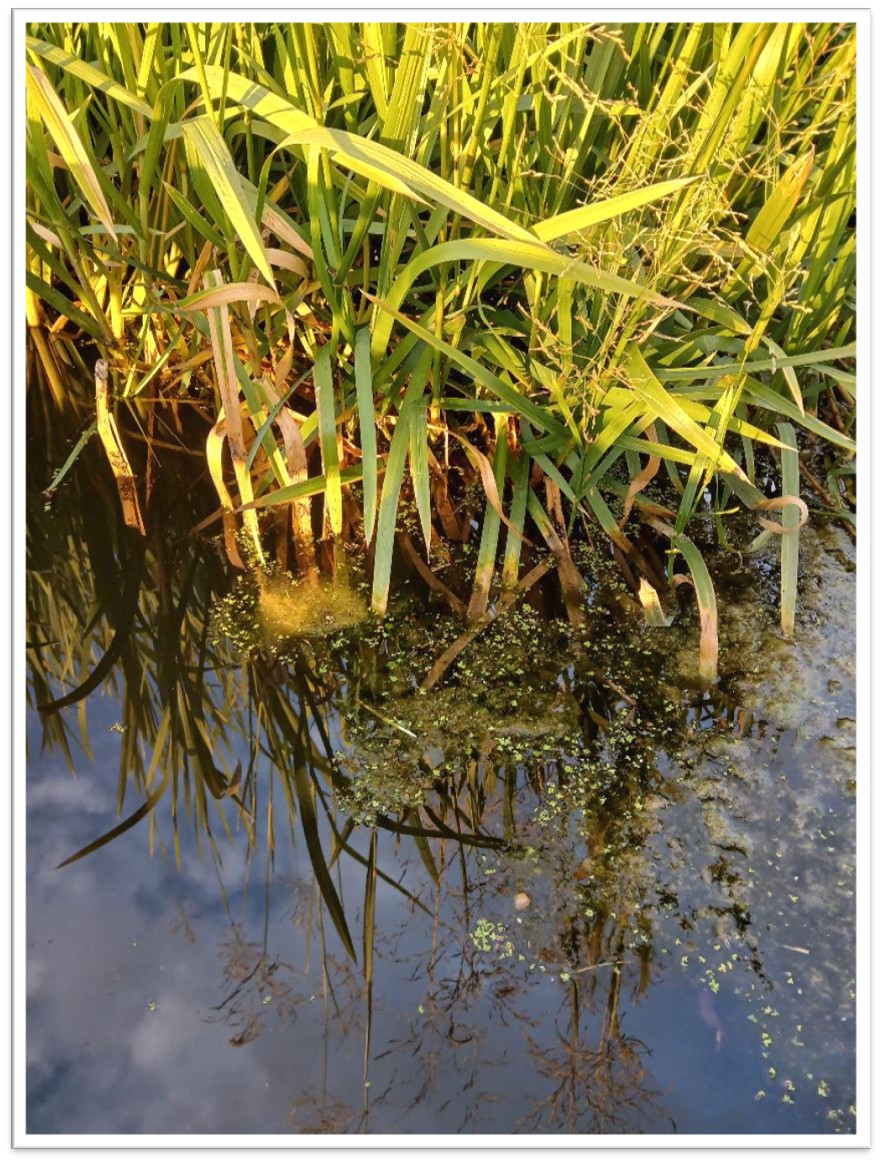
The underwater sounds used in this episode was recorded on the warm, still evening of 3rd August 2026 from the stern of the Erica.
Our view from the window was provided by Steve Tyrell aboard the narrowboat Precious Jet recoded while he was opposite The Nickelodeon pub in Wolverhampton. You can follow Steve and Precious Jet on his YouTube channel: Steve Tyrell.
With special thanks to our lock-wheelersfor supporting this podcast.
Ana McKellar
Susan Baker
Mind Shambles
Clare Hollingsworth
Kevin B.
Fleur and David Mcloughlin
Lois Raphael
Tania Yorgey
Andrea Hansen
Chris Hinds
Chris and Alan on NB Land of Green Ginger
Captain Arlo
Rebecca Russell
Allison on the narrowboat Mukka
Derek and Pauline Watts
Anna V.
Orange Cookie
Mary Keane.
Tony Rutherford.
Arabella Holzapfel.
Rory with MJ and Kayla.
Narrowboat Precious Jet.
Linda Reynolds Burkins.
Richard Noble.
Carol Ferguson.
Tracie Thomas
Mark and Tricia Stowe
Madeleine Smith
General Details
The intro and the outro music is ‘Crying Cello’ by Oleksii_Kalyna (2024) licensed for free-use by Pixabay (189988).
Narrowboat engine recorded by 'James2nd' on the River Weaver, Cheshire. Uploaded to Freesound.org on 23rd June 2018. Creative Commons Licence.
Piano and keyboard interludes composed and performed by Helen Ingram.
All other audio recorded on site.
Become a 'Lock-Wheeler'
Would you like to support this podcast by becoming a 'lock-wheeler' for Nighttime on Still Waters? Find out more: 'Lock-wheeling' for Nighttime on Still Waters.
Contact
- Facebook at https://www.facebook.com/noswpod
- Instagram: https://www.instagram.com/nighttimeonstillwaters/
- Bluesky: https://bsky.app/profile/noswpod.bsky.social
- Mastodon: https://mastodon.world/@nosw
I would love to hear from you. You can email me at nighttimeonstillwaters@gmail.com or drop me a line by going to the nowspod website and using either the contact form or, if you prefer, record your message by clicking on the microphone icon.
For more information about Nighttime on Still Waters
You can find more information and photographs about the podcasts and life aboard the Erica on our website at noswpod.com.
00:00 - Introduction
00:26 - Journal entry
00:58 - Welcome to NB Erica
02:12 - News from the moorings
09:39 - Cabin chat
14:17 - Sipping beneath the surface
25:12 - Aquatic soundscape
26:29 - Night-view through the window
27:27 - Steve Tyrell on the narrowboat Precious Jet
28:08 - Signing off
28:21 - Weather log
JOURNAL ENTRY
20th August, Thursday
“An oak leaf.
Parched and crisp by summer drought
Floats on the surface of the canal.
The water cups it gently,
Cushioning it within
The meniscus of her palm,
As if the canal knows that it is carrying
Something valuable and sacred.”
[MUSIC]
WELCOME
It's a still night. Bats swoop low across the glassy surface. Shimmering rings betray where they have taken a drink. Above, drifts of cotton wool clouds, glow ghostly pale, and entangle the growing moon in the south. She peeks out shyly, casting silver on sleeping waters, and then is gone; hiding once more.
This is the narrowboat Erica narrowcasting into the darkness of a late summer's night to you wherever you are.
Ah welcome, it is so lovely to see you, I was hoping you would be able to make it tonight. It's a beautiful night to sit back and enjoy. The kettle is singing and the biscuit barrel is full. Come inside and welcome aboard.
[MUSIC]
NEWS FROM THE MOORINGS
It's now midway through August, the summer seems to have, at last, settled down into something like the summers we are more familiar with. Towering cauliflower-white cumuli that climb tall into the blue. I watch for their tops to flatten into anvils. We’ve had some rumbles of distant thunder, loud enough to make Maggie raise her head and glance at us to check we have heard too, but no proper thunderstorm as yet. The old adage apparently attributed to King George II, of the British summer being three fine days and a thunderstorm has been well and truly shot, this year.
But the temperatures this last week have returned more to normal (in the low 20°s – roughly 70°F). T-shirt weather, with a frisson of cool first and last thing in the day. The other evening, we were out on the stern watching the sunset colours wash across the western skyline – we’ve been having some amazing sunsets – when we turned to each other and for the first time in about 3 months we said, ‘I’m feeling distinctly chilly!” I even went and got a jumper!
We’ve also had our first instances of wetting rain. It’s been welcome and felt good. It’s also been gentle, so no damage or wash-off. It is obviously nowhere near enough, but I welcome it, nonetheless. Towelling down Maggie from the rain after her walk, rather than a swim, has made a nice change. Remind me of this in the winter!
The canal remains closed, but water levels have returned – actually many of us think that it is as high as it was in the winter following all that rain. I am not sure where all the water has come from, but the CRT’s strategy seems to be working in this respect, at least. According to the CRT notices, the decision on whether or not the canal remains closed will be reviewed next Monday.
I explained in the last episode what the closure of a canal meant in real terms to those who used it. Essentially, no movement at all unless it is to use essential services. However, speaking to others there seems to be a lot of uncertainty about precisely what you can and can’t do. It is clear that you are not allowed to go through locks. However, there have been a couple of boats who have cruised up and down the pound, although that has tailed off in recent weeks. A local hire company has also continued to send its dayboats out. It is quite a long stretch here between locks and so it does allow a fairly decent cruise. I have also heard that the CRT are permitting this – as long as you keep your speed down. This would be good, as it will help to aerate the water. It will also help the hire company who must be really struggling to keep in business. The bottom half of the canal was closed all last spring and then closed again a month or two after it reopened over summer due to lack of water. But for the main, the canal remains silent with no traffic at all on it.
The towpaths remain busy. The palette of harvest is emerging and its paint brush splashes the hedge-sides liberally. Rosehips and haws are beginning to show in a blaze of scarlets and crimson. Necklaces of black bryony berries, pillar-box red, are beginning to festoon the smoky ashes of willowherb and loosestrife. Sloe, orbs of misty midnight and blackberries, cluster in counterpoint. As I pass by, I pluck a blackberry. It lies heavy and full on my tongue. Its juice sweet and sharp. It is amazing when you think about it. After those long, long, dry days of heat. Where did this liquid come from?
Maggie stops to sniff as a moorhen rows jerkily across the canal, his beak full of yellow blades of reed. They drag along each side of him, like overlong moustachios. Two-thirds of the way across, one of the leaves slips free. The moorhen, circles back, dips his head low and clamps it back between his beak and continues his traverse. He disappears into a thicket that hangs down into the canal and I catch a glimpse of the head of another moorhen. The nest is just above water level. It is cradled among a tangle of dead branches of an fallen hawthorn tree. I am glad no boats are going past at the moment, it would take the bow-wash of just one careless boater to wash it away. The female on the nest takes the offered leaves and with deft movement, moulds them into the cupped nest. The male watches as she does this and then turns and leaves. He is aware of Maggie and me on the opposite bank so he heads off along the offside bank away from the nest, perhaps in search for more nesting material. The female, settles back. I am aware of the little red forehead patch, patiently sitting on the next brood of eggs, as we too move on.
[MUSIC]
CABIN CHAT
[MUSIC]
SLIPPING BENEATH THE SURFACE
[MUSIC]
The sun is low in the west and the water is slabby and quarry grey. It is one of those times when it looks like we are floating over a bottomless chasm. Even the light cannot penetrate it, it glances off the choppy wavelets, like sparks flashing off clashed steel. A blustering wind blows the water into racing ripples, as if the canal was being pushed by a flooding tide. The peaks are big and thick enough to lift the lone female mallard that ploughs her way across the silver sun-path of dancing light. Earlier, the geese flew overhead, a ragged stream, unlike the tight, arrow-edged discipline of their usual flight profile, it was more the fluid rills of mountainside burns that cascade in torn linen-like waterfalls down damp gullies and ghylls steeped with wet moss and heather. But nonetheless, they filled the sky with their calls that bury themselves deep in the hidden sequestered places of our beings.
Around this time of evening the kingfisher flies past one last time – a darting flash of bronze or blue, sometimes small eruptions of water as he dives. At other times, his presence is more felt than seen. A grey flicker in the gloaming. No light to catch his vibrant plumage. Tonight, the arrow-flight, a glimpse of white, keeping to the contours of the canal and then out of sight. No pauses to dive, perhaps it has been a good day and his belly is already full.
And around the hull of the boat next to us minnows flash silver. They form lines, like dressmaker’s pins stuck to a magnet, just below the waterline. A firework constellation of glinting movement. Never stationary. Always on the go, feasting at the algae that collects on the hull. Behind them a crowd of them hangs a nebulous cloud waiting their turn. They remind me of brain scans that show neural pathways and flashing synapses, or the clouds you get at nighttime when there is sheet lightening. There’s no apparent order, but there is also some unseen system at work here. A fish flicks into the suddenly vacant gap in the feeding line, grabs a few mouthfuls and then flash, it disappears back into the cloud. Immediately, the gap it has left is filled by another fish. There is no sense of a need to compete with each other for a space at the hull. Each fish seems to know, or be aware, that there is enough food here for everyone and that their turn will come. There seems to be no bullying or fighting for a space. Minnows don’t seem to be plagued with the problem of one or two individuals hoarding all the resources. It’s not a queue, it is the opposite of a queue, but it operates exactly like a queue. I’d love to know how it works. I could watch them all evening, this busy throng, there’s something strangely calming about them.
Just a few feet away, the carp glide and forage. Every now and then they break the surface, the soft curve of their back and dorsal fin mirroring the arc of their motion.
For so long language and communication was viewed as a uniquely human accomplishment, although there have always been pockets of older knowledge and lore that have disagreed. In our culture of human exceptionalism, these older ideas have generally been dismissed as eccentric whimsy and intellectual naivety. More recently, research has given their claims more credence. Conceptions of language and communication have broadened way beyond speech. Communication seems to be everywhere, even here beneath the surface of the water.
It has long been known that aquatic mammals like whales, dolphins, and porpoises, communicate with each other through vocalisations and other non-vocal techniques. Sharks are also known to communicate with each other using body posture as well as electrical and chemical cues. Research into other fish is still in the very early days, but recent studies are re-looking at the strange popping, grunting and clicking noises that they emit. Initially, these have been explained away as purely mechanical associated with feeding (mandibles snapping shut, swim bladders adjusting buoyancy). However, researchers are beginning to find patterns and complexities within this this underwater soundscape that suggest some of these sounds are being used to communicate with each other. These noises pointing also to ways of communicating danger, food resources, maybe even contact calling. Because water is denser than air, sounds travel faster and further. The aquatic world is far from silent.
Let’s listen in. Listen to this watery world that is so close and yet so distant to us; one that we’re intimately a part of and yet also so very alien to.
But let’s slip back to the swelter and blaze of the hot days, when the carp dozed just below the surface and damselflies darted from duckweed frond to duckweed frond.
As the kingfisher shimmers past on wings of fiery blue, and the sun sinks further west behind the old ash leaning on the hill above us, and the loosestrife and bedstraw, thistle and reed still resonate with bee and butterfly wings.
The evenings following hot days are always the most active. While humans relax into the cool and conversations can be heard across the water, and from time to time the smell of meals cooking, the fish too seem to gain their second wind. This is the time when the mirrored waters, cast bronze and ruddy gold by the sun, erupt with fish breaking the surface, grabbing at insects caught on the surface, sending coppery rings across the waters.
Let’s slip below the surface. Listen; what you will hear is what the fish sense. Those subaquatic sounds that are part of their world. The sound of hundreds of minnows feeding off steel hulls, clustering in their nebulous glittering clouds and then, individually, darting to feed when a space appears. And the carp and roach, just below the surface, foraging gnats and drowning midges. The clicks and pops they make, insensible to us, but they know what they mean. They will read them as easily as we read the shifting shadows that cross our days or the smell of rain in the air.
Have you ever wondered what ducks swimming overhead must sound like to a fish? At the end of the recording, you will hear just that.
[Minnows feeding and at the end ducks swimming overhead]
NIGHT VIEWS (THROUGH YOUR WINDOW)
With thanks to Steve Tyrell on board the narrowboat Precious Jet.
SIGNING OFF
This is the narrowboat Erica signing off for the night and wishing you a very restful and peaceful night. Good night.


