Finding Erica (On choosing a boat)

There’s a warm welcome aboard the Erica tonight. But why the Erica? Why not any of the other boats we viewed and discussed? What was it about the Erica that made her special enough for us to buy, even though there were other boats that seemed to be stronger contenders? How did we know she was the right choice? Jo Bell’s brilliant book Boater helps us to find some answers. Journal entry: 12th April, Sunday “From Bridge 55 Children and old men Lean on Georgian ironwork W..

 Apple Podcasts
 Spotify
 Amazon Music
 Castbox
 Podchaser
 iHeartRadio
 PlayerFM
 Goodpods
 TuneIn
 Podcast Addict
 Castro
 PocketCasts
 RSS Feed
 YouTube
 There’s a warm welcome aboard the Erica tonight. But why the Erica? Why not any of the other boats we viewed and discussed? What was it about the Erica that made her special enough for us to buy, even though there were other boats that seemed to be stronger contenders? How did we know she was the right choice? Jo Bell’s brilliant book Boater helps us to find some answers.
Journal entry:
12th April, Sunday
“From Bridge 55
Children and old men
Lean on Georgian ironwork
Warmed by the sun
And gaze in silence
Into the waters below.
One sees time
Like slow waters
Drifting past,
The other the wonder
Of a world unfurling.
Maggie plunges her head
Under calm waters
Retrieves a stick
And I thought I saw
A smile in her eye.”
Episode Information:
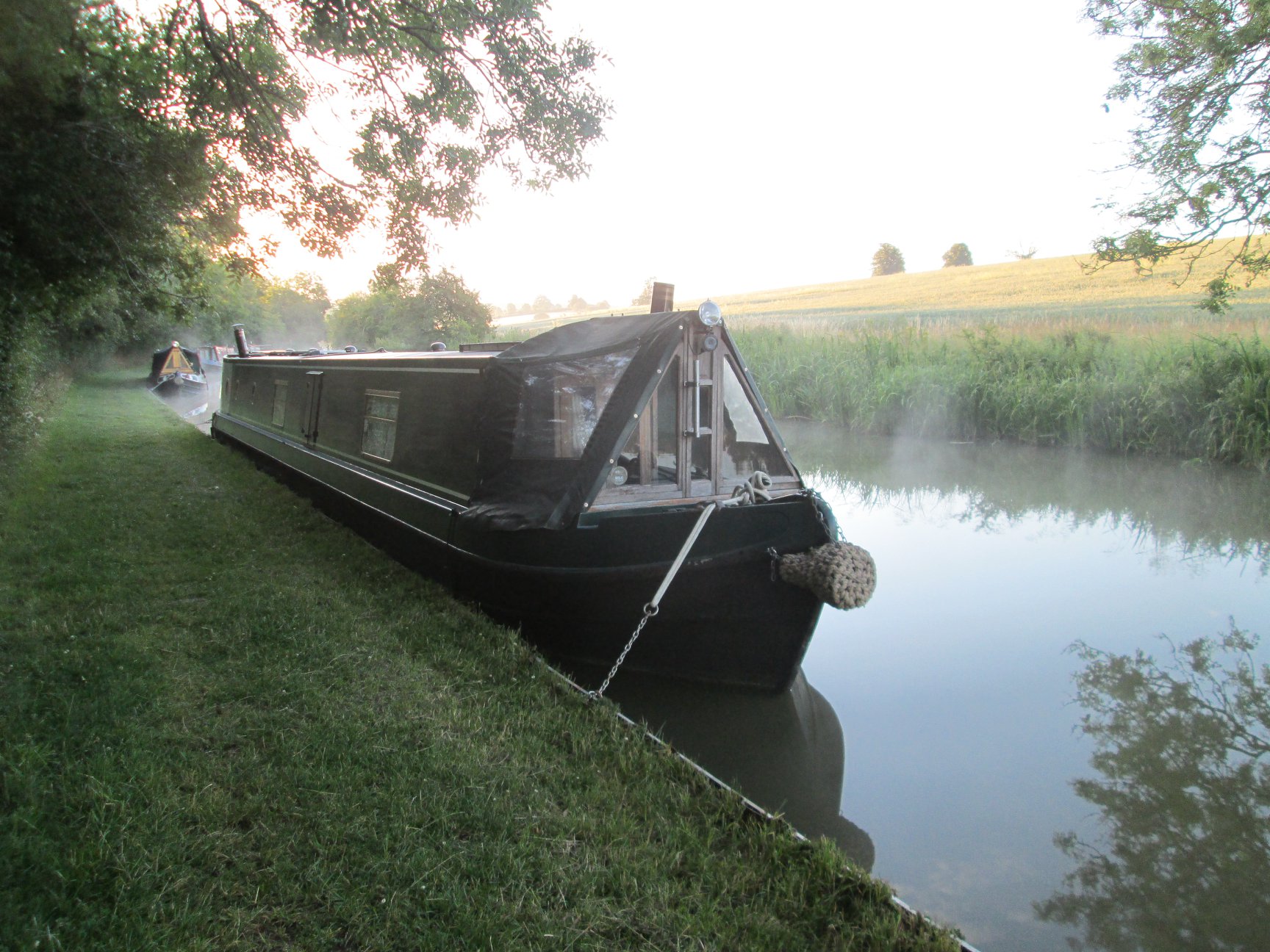
NB Erica on our first night aboard her (Leicester Canal)
In this episode I talk about and read a couple of short extracts from poet and industrial archaeologist Jo Bell’s (2025) canal history and memoir, Boater: A life on England’s waterways, including her poem ‘A Marriage.’
Jo Bell was the first Canal Laureate (2013-2015).
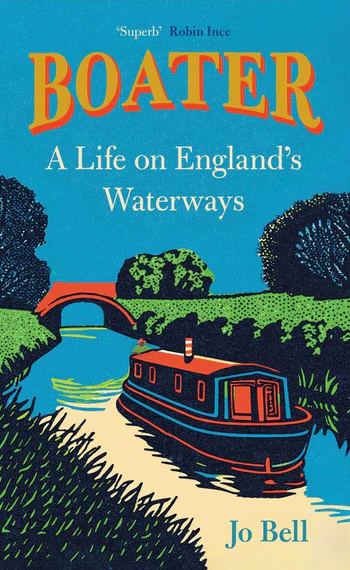 Boater is published by Harper Collins.
With special thanks to our lock-wheelersfor supporting this podcast.
Ana McKellar
Susan Baker
Mind Shambles
Clare Hollingsworth
Kevin B.
Fleur and David Mcloughlin
Lois Raphael
Tania Yorgey
Andrea Hansen
Chris Hinds
Chris and Alan on NB Land of Green Ginger
Captain Arlo
Rebecca Russell
Allison on the narrowboat Mukka
Derek and Pauline Watts
Anna V.
Orange Cookie
Mary Keane.
Tony Rutherford.
Arabella Holzapfel.
Rory with MJ and Kayla.
Narrowboat Precious Jet.
Linda Reynolds Burkins.
Richard Noble.
Carol Ferguson.
Tracie Thomas
Mark and Tricia Stowe
Madeleine Smith
General Details
The intro and the outro music is ‘Crying Cello’ by Oleksii_Kalyna (2024) licensed for free-use by Pixabay (189988).
Narrowboat engine recorded by 'James2nd' on the River Weaver, Cheshire. Uploaded to Freesound.org on 23rd June 2018. Creative Commons Licence.
Become a 'Lock-Wheeler'
Would you like to support this podcast by becoming a 'lock-wheeler' for Nighttime on Still Waters? Find out more: 'Lock-wheeling' for Nighttime on Still Waters.
Contact
- Facebook at https://www.facebook.com/noswpod
- Instagram: https://www.instagram.com/nighttimeonstillwaters/
- Bluesky: https://bsky.app/profile/noswpod.bsky.social
- Mastodon: https://mastodon.world/@nosw
I would love to hear from you. You can email me at nighttimeonstillwaters@gmail.com or drop me a line by going to the nowspod website and using either the contact form or, if you prefer, record your message by clicking on the microphone icon.
For more information about Nighttime on Still Waters
You can find more information and photographs about the podcasts and life aboard the Erica on our website at noswpod.com.
00:00 - Introduction
00:27 - Journal entry
01:12 - Welcome to NB Erica
02:54 - News from the moorings
07:45 - Cabin chat
12:43 - Finding Erica (On choosing a boat)
21:45 - 'A Marriage' by Jo Bell
24:44 - Extract from Jo Bell's 'Boater: A life on England's waterways' on finding 'Tinker'
31:19 - Signing off
31:35 - Weather log
JOURNAL ENTRY
12th April, Sunday
“From Bridge 55
Children and old men
Lean on Georgian ironwork
Warmed by the sun
And gaze in silence
Into the waters below.
One sees time
Like slow waters
Drifting past,
The other the wonder
Of a world unfurling.
Maggie plunges her head
Under calm waters
Retrieves a stick
And I thought I saw
A smile in her eye.”
[MUSIC]
WELCOME
To borrow from Dylan Thomas, ‘It’s a spring moonless night’ tonight. It is not quite starless or Bible black, scudding clouds play with the stars and the paper-thin sickle of the new moon has just slipped below the western horizon. A playful breeze feathers patches of the canal's mirrored surface and along the bankside the new-growth rushes and reeds are beginning to learn to dance with the wind – still slightly stiff, awkward, unable to find the supple flex and bend of their new stems; adolescents at a village hall dance. A moorhen scuttles knowingly, keeping to the lamb-bleating dark edges.
This is the narrowboat Erica narrowcasting into the darkness of spring night in April to you wherever you are.
I am so pleased you managed to make it. How are you? I hope you are well. It's a perfect spring night, but the temperature is beginning to tumble and we'll be lucky to escape a frost tonight. So come inside where the stove is glowing cosily and the kettle is singing. There's a seat waiting especially for you. So, watch your head on the hatch and welcome aboard.
[MUSIC]
NEWS FROM THE MOORINGS
April morning. An April light. That special unique kind of light that you only get at two times a year at this latitude; April and some of May, and September and some of October. A special kind of clean, washed, light and blue sky. The blue of the broken stumps of chalks that I had as a child. The blue of forget-me-nots and eyebright, speedwells, geranium and cornflower. It’s the kind of light that always makes me pause. It can literally stop me in my tracks. It’s a light that reminds me that sometimes in this life there are things that you can continually experience for the first time, even though each year that same thought has struck, under that same blue sky, in the same special quality of light. I would try to describe it. But I can’t. But I think, you know exactly what I am talking about. That light. That quality of light you get to find in a Krøyer painting or on the beach beyond the pinewoods at Wells or standing in the garden pegging out laundry on the line and looking up, you glimpse blue among the pillowed white of climbing clouds, and the tops of emerald green fountains of fully-leafed horse chestnut trees. The accidental chance of meteorology and the earth’s tilt around the sun, at these precise moments; who knew it grant us such splendours in the slant of precious light?
And along the towpath that light, gold with morning and softened by an inversion mist that clings to valleys and the soft bowls folded into the patchwork of fields, that blue and its light have yet to appear. But it will be only a matter of time. The hawthorn have taken up the batten, replacing the honey-sweet snow drift of blackthorn with its own. Bluebells and cowslip daub the water’s edge with colour. The fields above us are thickly scattered with dandelion suns, blazing rich gold and buttery, humming with life. I came across the first patch of lady’s smock (the cuckoo flower) the other day; milky-white blushing delicately pink. In the wooded cutting, carpets of celandines are still flowering in the deep green oceans of their leaves and the sea wrack of goosegrass and young dead nettle. The elephantine leaves of burdock lie proud and easy on the rising tide of green like great land-locked lily pads. Pinpricks of purple vetch stud the undergrowth like discarded necklaces. Tiny white stars of wild garlic mustard glint and glimmer and the first embryonic parasols of cow parsley are beginning to show among the profusion of green feathery leafage of wild carrot, parsnip, cranesbill, and hogweed.
On Horse Hill, the five apostles graze the mist wet grass. Their flanks wet with dew and their breath snorting clouds of steam. One is lying on his side. In the lifting mist, his grey body rises like a beached whale caught upon the sands. He lifts his head as we approach and then lowers it again. We continue to climb out of the mist and into the sunshine and the blue and the light. The miraculous special April light.
[MUSIC]
CABIN CHAT
[MUSIC]
FINDING ERICA (ON CHOOSING A BOAT)
I’ve been reading Jo Bell’s brilliant Boater: A life on England’s waterways. She’s an archaeologist and poet – in fact, she was the inaugural Canal Laureate for the Canal and River Trust and Poetry Society from 2013-2015. Poet and archaeologist make a wonderful combination. She reads the heartbeat and life beneath the layers of encrusted soil and rust bloom and decay. It’s a rare talent brining the past to life and rarer still to secure our presents within the tangled phylogenetic network our histories. Working muddy trenches in building sites in the driving winter rain with numbed fingers and a burning back, and then the late nights hunched over a computer keyboard translating scrawled field notes and pieces of broken clay that weep water in pools under the desk lamp into the martialled facts and figures and rigour that is required from august journals could sap any poetry out of anyone. But not for Jo Bell. What it does is, it brings the special qualities of dirt and grit, the realities of the imperfect to her poems. It keeps them honest.
I’m only about ¾ of the way through, but am enjoying it immensely. Boater is a layered excavation of histories, personal and national – each rigorously and sensitively examined through the expert use of her trowel, tape, and line level. Thomas Telford and the female navvy, Lucky Logue who worked in the same gang as the notorious grave robbers and killers Burke and Hare, meet us as fully fleshed and as real Digger, Kevin the cantankerous marina manager who hates boaters, and Shamen Wayne. The muddy swamp-ways of early 17th century Cheshire become as familiar to us as Bugsworth or the gaggle of gongoozlers lined alongside watching boats pass through Stenson’s Lock, a lock in which, due to the crass behaviour of an over confident hire boater almost sank her boat.
The culture that surrounds life on the cut is often hard to pin down. As Bell notes, historically, it was a tough hardworking, oral society. Often illiterate and with little spare time for creative pursuits, those first working the system left no rich seam of literature, or music to provide us with tangible glimpse of their worlds. But then, a lack of evidence, she argues, should not be confused for evidence of a lack. Culture was (and is still) there, but often in intangible ways; behaviours, actions, highly localised vocabulary, place names, the – what is now defined as the – psychogeography of the place.
For a while, Jo was based a few miles away from us while working with The Working Boats Project in what she describes as “the most flagrantly English section of English canals.” It was here she gained her love, knowledge, and deep respect for the canal system and the boaters (in all the colourful and varied forms) that it has supported throughout its 250 years of existence. It introduced her to the distinction of purist conservation and living heritage, helping to nudge her in the direction of a working solution to the paradox of the Ship of Theseus – or ‘Trigger’s broom’ as it is now more popularly known. The history of the canals and its people is living, messy, and contradictory, but it is living.
In Jo Bell’s book, that living past and the present rub shoulders together (often within the same chapter) – in the ways they often do on the canal. It is difficult not to suddenly be torn from the present when passing under a bridge cut deep with scour lines made by the rain-wet gritty tow ropes, or turning a corner and come upon a derelict wharf thick with the fiery smoke of willowherb and shattered concrete and ghosts. Under Jo Bell’s well-adapted eye, ripples from the ephemeral and even ineffable past can still be silently felt shimmering across the still waters of our present.
“Most of us live afloat,” Jo writes, “not because it’s cheaper than a house, but because we find it better than a house. It’s not a lifestyle. It’s a life.”
I particularly loved Jo’s description of finding and buying her narrowboat, Tinker. That, almost instinctive mutual embrace by human and somehow living entity of steel and wood, brass, diesel and oil that creates a relationship that is difficult to replicate in bricks and mortar. The ‘click’. The indefinable event that is deeper than rational thought. This stuff is as much about the intangible mysteries of the heart (or maybe something even deeper) as much as it is about processes of the mind. Like Jo, we'd viewed and agonised over many. We both had a list of criteria to guide us. I was adamant that it should feel like a boat, not a caravan or mobile home without wheels. I perched on divans and dinettes with a critical eye. Our criteria morphed and adapted as we got to know boats better and as we talked to more and more brokers and any liveaboards who had the misfortune to be in our vicinity. We'd adequately consideration to the winter cold, but hadn't given any thought of summer heat. Duck hatches became essential and not just a quirky novelty. There were at least two other boats on our list of possibilities for our life afloat that on paper looked better bets. So why, the Erica? We were even on the brink of putting down a deposit and booking a survey on one. So, what stopped us? We were extremely excited and full of plans, but, even so, what held us back? Why the Erica? What was it about this particular boat that kept calling us back?
Jo Bell begins her chapter on ‘Buying a Boat’ with her poem, ‘A Marriage’.
[READING]
I think we’re getting to the answers of my previous questions here. How will I know the right person to marry?’ the young me would ask and I have subsequently been asked countless times later. The answer is always the same, ‘You will know.’
“But how will I know?”
“You will know.”
“But what if I don’t? What if I never get that certainty, or don’t recognise it when it comes?”
“You will know.”
How did I know that Donna was the one for me? Because I knew. How did I know? I don’t know how I knew, I just knew. There’s no real way of explaining things like this, because it is not in the ‘how’ (the process or the method to the thing of knowing. It is entirely in the ‘knowing.’
Jo Bell again. Here she is describing how she first encountered (the “unremarkable, functional rather elegant”) Tinker with her friend, colleague and mentor from The Working Boats Project who was there to offer veteran boater’s wisdom on finding a good boat to buy.
“The cabins were dark and slightly damp…”
[READING]
Buying a boat to live on is not like any other purchase. It’s the commencement of a relationship. Sometimes, initially it can be breathless and star-filled, often hesitant; attended by that shy awkwardness and diffidence of a first date that makes you ham-fisted and talk as if you were a complete stranger to yourself – and an annoying stranger at that. It’s really about the learning of each other’s languages. For that, you need to find the right boat.
I loved listening to Jason and Karen talking about their new boat, Dera Rosa. The excitement and joy and recognition and how they talked about the things that were not perfect; the jobs that needed doing, the things that required being sorted, the changes needing to be made. But (and it is the most important but of all), the relationship together had already begun.
Yes, on paper, other boats had an edge on the Erica. None were perfect – we couldn’t afford perfection even if it existed. But they maybe had an edge. And iwas true that there were several boxes on our non-negotiable list. The things a boat HAD to have – the deal breakers – that remained unticked. Those in themselves should have made us reject her. But we didn’t. Moreover, it was clear that her paintwork was a bit tired, the cratchboard was on its last legs, the entire stern fitout was all wrong. But out of all the boats we had seen – and there were many – it was to her our talk and dreams kept returning. “Yes, but she doesn’t have…” Yeah, but we can change that…” “Well, we could also on Lazy Days III” (or whatever the name of another contender might have been). “Yes, but it wouldn’t be quite the same.”
We kept returning. Standing together in the saloon which neither of us particularly liked and which felt strangely anonymous and sterile, ideal for extended holidays, but not the cheery warmth of a welcoming hearth. But we also could both feel something intangible, indefinable about her. A faint smell of wood and metal, oil and diesel and dust and ozone, and the silence when words have long stopped being spoken. We'd play once more with latches and lockers. Open the duck hatch, fiddle with taps as we had done many times before. Not because we needed to, but it was just something to do while we listened and felt for a deeper conversation that was happening between us and this steel tube. This was never to be about latches and dinettes, or even thickness of steel and engine hours.
The acid test. My thought experiment that we rigorously applied to every boat we stepped aboard. Mid-February, drenched, cold, hungry. Trudging along the towpath with three carrier bags of shopping. What would it be like to step on board, coat dripping, hands raw, tired? Where do you put your bags? What do you do with your coat, where would you place your muddy boots? Is it doable? What would it feel like?
We stood in the stern compartment of the Erica and imagined.
I think it would feel like… I think it would feel like coming home.
SIGNING OFF
This is the narrowboat Erica signing off for the night and wishing you a very restful and peaceful night. Good night.


