More Raven than Rook (The clock-winders)
Tonight, as the rain falls softly outside and the kettle sings on the hob, we are letting our thoughts roam free. Together, we shine a light into the forgotten corners of history to explore a quiet, essential rhythm; the often-overlooked role of the people who wound the parish clocks, and the precious gift they gave, the burden of time, Journal entry: 11th May, Monday “Mother and a host of tiny ducklings (Don't count them. Just enjoy). A raven alights on the One O...

 Apple Podcasts
 Spotify
 Amazon Music
 Castbox
 Podchaser
 iHeartRadio
 PlayerFM
 Goodpods
 TuneIn
 Podcast Addict
 Castro
 PocketCasts
 RSS Feed
 YouTube
 Tonight, as the rain falls softly outside and the kettle sings on the hob, we are letting our thoughts roam free. Together, we shine a light into the forgotten corners of history to explore a quiet, essential rhythm; the often-overlooked role of the people who wound the parish clocks, and the precious gift they gave, the burden of time,
Journal entry:
11th May, Monday
“Mother and a host of tiny ducklings
(Don't count them. Just enjoy).
A raven alights on the One Oak
And barks at the morning sky.
A thrush peels off notes in triplicate
Expansive, avant-garde.
I listen with the untutored ears
Of a school boy
Taken to the Proms.”
Episode Information:
I have also recorded an episode (October 2022) about this period in my life, in relation to the autumnal resetting of the clocks: Today I held back time.
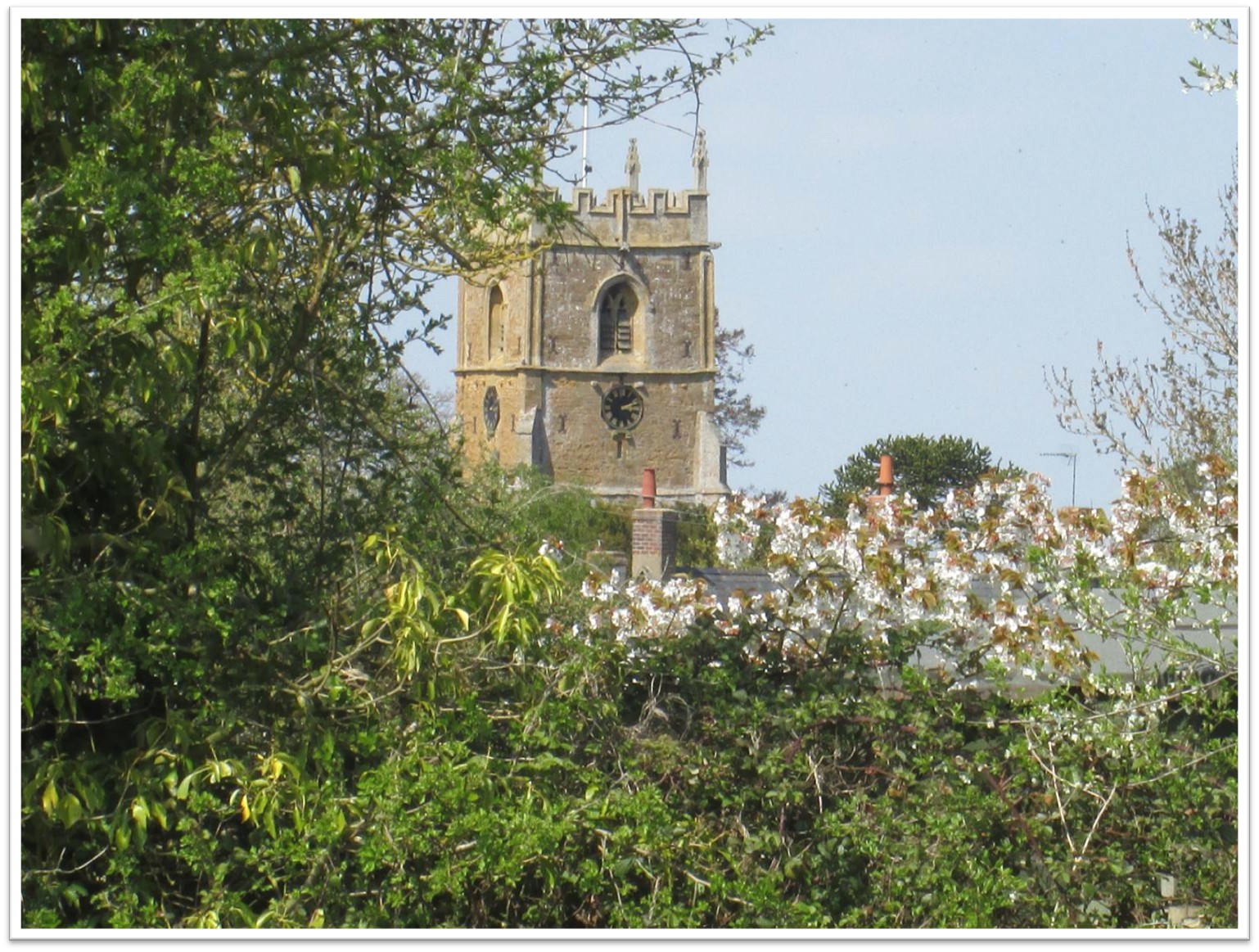
St Mary, Tysoe in springtime
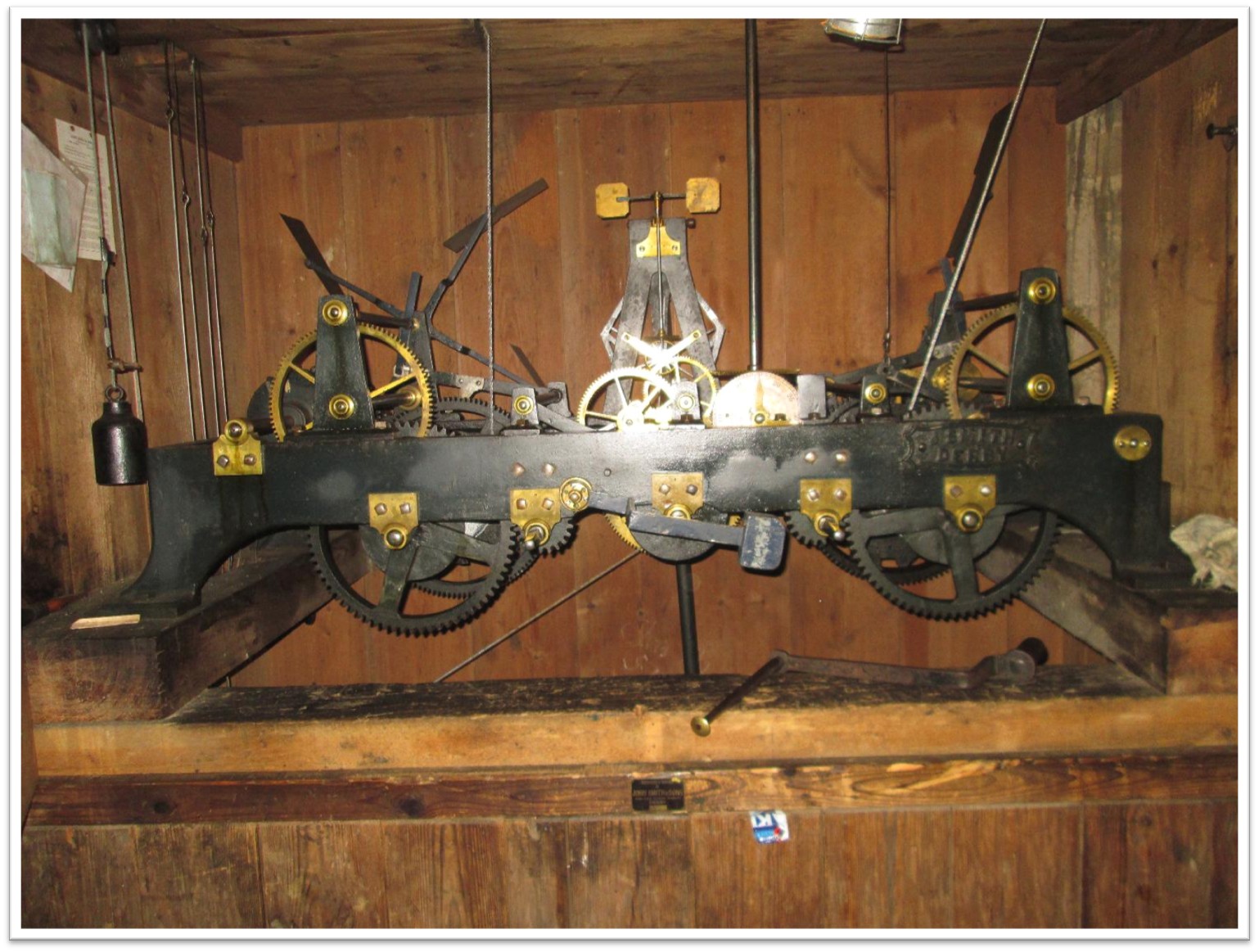
The clock mechanism showing the three trains
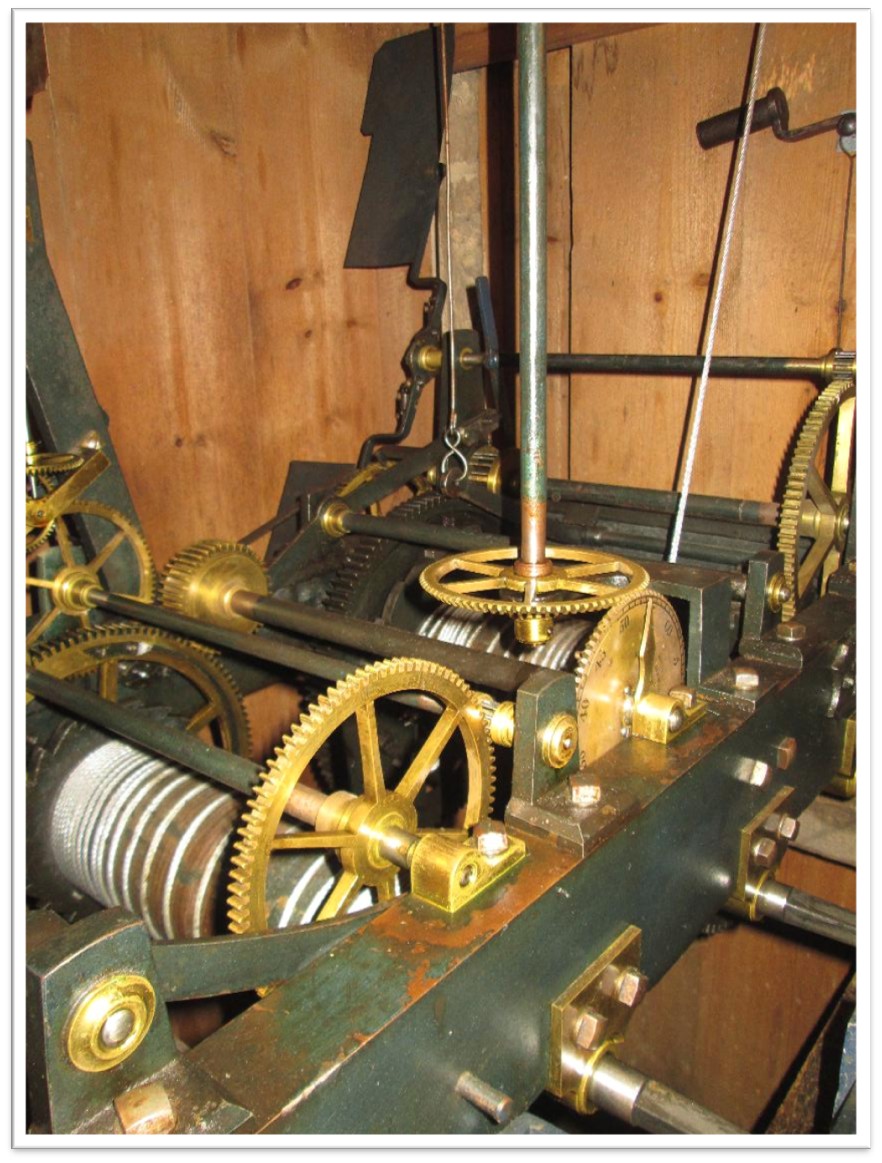
The chime train (closest) which powers the quarter chimes and the going train which powers the clock mechanism. The strike is in the far right and powers the hourly bells.
If you would like to watch my original video that accompanied some of the words that I read in this episode you can find it here:
With special thanks to our lock-wheelersfor supporting this podcast.
Ana McKellar
Susan Baker
Mind Shambles
Clare Hollingsworth
Kevin B.
Fleur and David Mcloughlin
Lois Raphael
Tania Yorgey
Andrea Hansen
Chris Hinds
Chris and Alan on NB Land of Green Ginger
Captain Arlo
Rebecca Russell
Allison on the narrowboat Mukka
Derek and Pauline Watts
Anna V.
Orange Cookie
Mary Keane.
Tony Rutherford.
Arabella Holzapfel.
Rory with MJ and Kayla.
Narrowboat Precious Jet.
Linda Reynolds Burkins.
Richard Noble.
Carol Ferguson.
Tracie Thomas
Mark and Tricia Stowe
Madeleine Smith
General Details
The intro and the outro music is ‘Crying Cello’ by Oleksii_Kalyna (2024) licensed for free-use by Pixabay (189988).
Narrowboat engine recorded by 'James2nd' on the River Weaver, Cheshire. Uploaded to Freesound.org on 23rd June 2018. Creative Commons Licence.
Piano and keyboard interludes composed and performed by Helen Ingram.
All other audio recorded on site.
Become a 'Lock-Wheeler'
Would you like to support this podcast by becoming a 'lock-wheeler' for Nighttime on Still Waters? Find out more: 'Lock-wheeling' for Nighttime on Still Waters.
Contact
- Facebook at https://www.facebook.com/noswpod
- Instagram: https://www.instagram.com/nighttimeonstillwaters/
- Bluesky: https://bsky.app/profile/noswpod.bsky.social
- Mastodon: https://mastodon.world/@nosw
I would love to hear from you. You can email me at nighttimeonstillwaters@gmail.com or drop me a line by going to the nowspod website and using either the contact form or, if you prefer, record your message by clicking on the microphone icon.
For more information about Nighttime on Still Waters
You can find more information and photographs about the podcasts and life aboard the Erica on our website at noswpod.com.
00:00 - Introduction
00:26 - Journal entry
00:59 - Welcome to the NB Erica
02:12 - News from the moorings
04:48 - Cabin chat
09:42 - More Raven than Rook (The clock-winders)
34:54 - Signing off
35:08 - Weather log
JOURNAL ENTRY
11th May, Monday
“Mother and a host of tiny ducklings
(Don't count them. Just enjoy).
A raven alights on the One Oak
And barks at the morning sky.
A thrush peels off notes in triplicate
Expansive, avant-garde.
I listen with the untutored ears
Of a school boy
Taken to the Proms.”
[MUSIC]
WELCOME
Washes of rain sweep along towpath and water, spring-soft and gentle. Dark waters from the sky joining the dark waters of the earth. It's the night of the new moon. The lunar triduum; three nights of darkness, holy in its own unaccountable, and wilder way.
This is the narrowboat Erica narrowcasting into the darkness of a damp moonless May night, to you wherever you are.
Greetings, it's so good to see you. How are you? I was hoping that you'd make it tonight. The dampness is making the night feel chilly. The stove is on and the cabin is warm and cosy. The kettle is singing on the hob, the biscuit barrel is full, so come inside and welcome aboard.
[MUSIC]
NEWS FROM THE MOORINGS
These are the glorious days of sunshine and wind and showers. When clouds climb high and thunder rumble. When the weather can spin on a sixpence, starting out sharp with frost and then melt syrupy with sunshine and then blacken into hail – all in one morning. Colours burst, purple vetch and tiny jewel-dust of cranes-bill. A few yards along the bank its blooming with blazing poker-like pillars of sainfoin (healthy hay). It looks too exotic to be scattered among the chickweed, poppy and rangy ox-eye daisies and hawksbeard. Once it was common, a much-needed staple, its medicinal qualities vital for keeping livestock healthy. Science combined with economic shifts and agricultural practice led to it becoming rare. However, it is good to see that it is at last making a comeback.
These are the glorious days when the canal can turn in no more than an instant from mirror calm where the surface reflects its world with vibrant, glass-like, solidity to the furrowed chop of racing wavelets that shiver from bank to bank as the rushes bend low.
The slow rhythm of the canal has begun to gradually gather apace. Boats pass, holiday hire and private, snatched conversations on the towpath. “After last year, the rain is a bit of a relief,” says one we pass on our morning walk.
“I had noticed that the levels have dropped an inch or two.” I remark.
“The other night,” he replies, “a boat went through late. The next day, I met one of the CRT guys who told me that the gates of the flight 5 or 6 miles down had been left open.”
“Ah, that might account for the drop.” I say.
Our dogs amiably sniff the hedgerow for news.
[MUSIC]
CABIN CHAT
[MUSIC]
MORE RAVEN THAN ROOK (THE CLOCK-WINDERS)
My past is sewn together with a patchwork of jobs, a rather chaotic jumble, perhaps. It certainly couldn’t be called a career path – not in the conventional sense, at least. It’s untidy and spring-healed, and it leaps and jumps and turns on a ha’penny bit, quixotic and haphazard. Wrong turns? Yes, but I do not really regret much of it. But looking back, of all the jobs I have been involved with, the one I loved the best (although there are some close contenders); the one that I derived the most pleasure and satisfaction from; the one that touched the very deepest part of me and in which I felt the most comfortable and the only one in which I felt the truest to me; was the three years that I was the village clock winder. It was unpaid, unrecognised, known about just by a few, appreciated by even fewer.
It required climbing the church tower twice a week (three if I had miscalculated) and wind up three weights that had slowly, incrementally, inched their way to the cluttered mousey twilight of the floor at the base of the tower. Check the mechanism – the going as it was called – edge the four big minute hands that swept the four clock faces, one on each side of the tower, forward a nudge, if the clock was working a little slow. Always forward. Never back. If time was speeding over the rooftops too quickly, stop the pendulum for the required length, and then ease back into its unhurried swing. The whole thing took about half an hour, all told. Often less than that. There were three weights t be wound. One associated with the tolling of the bell (the strike), one for the clock itself (the going), one for the chimes that rang out on the barrel carillon every quarter hour. You needed to calculate the winding to occur between each quarter chime. Sometimes, I would miscalculate. The warning ratchet would jump. One minute to stop the turning, disengage the winder (think of a windlass), place it somewhere safe, and wait. I used to love that. Towards the end, I could time it to almost perfection. The last wind just before the trip. Breathless (always breathless) I’d sit on the stone steps beside a trap door in the tower wall, and listen to the bells rock and peel a couple of feet above my head. It was to check that the strike had not got out of sequence, I would say (God forbid the village bells should ring out 9 or 11 at 10 o’clock. And it was, sort of, but I really could have done that just as easily by listening out for them at home. No, the truth, that I didn’t even tell myself, was something far deeper, far more spiritual.
It was no hardship. Even in winter, it was fine. At the time, we lived literally just round the corner from the church. Even better, although it made the walk slightly longer, I could walk to the church without even touching the road and go entirely by fields and snickets. In late summer, the meadow grass reached up to my waist and shimmered with butterflies. One winter, the snow came over my wellingtons and made climbing the ladders treacherous. In summer heat, the damp coolness of the tower was heaven. Although I tried to keep the days and times as regular as possible, my favourite times to wind were when they coincided with sunrise and sunset. Watching dawn stretch over Sunrising Hill through the little squares of dull Victorian glass. Then there was the time when I was halfway through winding when I was suddenly plunged into darkness and I heard the heavy oak church door three floors below me slam shut and the clunk of a key being turned.
Then there was the day, when a new notice pinned to the notice board in the entrance porch caught my eye, flapping gently in the wind, and I read there the announcement that after the required consultation period, it has been agreed that the church clock was going to be automated and be fitted with an electric winder. I read it three or four times, struggling to make sense of the words that swam before me. It came completely out of the blue. I heard later that the main argument was that there was no longer anyone in the village prepared to take on the clock winding duties.
On the great wooden cabinet and some of the support beams, the village clock-winders through the ages carved their names or initials. Later from the close of 1800s they wrote their names on the right-hand panel. A list of names familiar to me as I read them as I wound, just as those higher in the list must have done. Names inextricably linked with the winding of time and giving the village its next allotment of 84 hours, seven sweeps of the four heavy hour hands around the full moons of each clockface. Family names, many still found in the village, living and on the war memorials. Names I had come to know with a strange intimacy.
It felt like a betrayal to them, to the workings of time to this particular village. Not so much a betrayal by those involved in making that decision – and I had my suspects, or the mendacious way it was handled (such is politics great and small), but a betrayal by me. I had still not written my name on the cabinet, not yet. Not until I felt the time was right. And now I knew that my name would be the last in that line that traced the history through two great wars and upheavals both national and local. The time still didn’t feel right, but one afternoon – I can barely now remember – I took out my pen and my name joined the list of all those who gave the village time. And under that wrote the heavy word finis.
A chance post that recently caught my eye on social media brought all this to mind again. And I remembered that afterwards I recorded a video of that last winding. I have included the link in the programme notes, but will read the words of it here:
……….
Every week, twice a week, I would climb these worn stone steps. Climbing starward to where the prayers of old ring with bat song and the fire of tested faith. Owl high, the sky's hinterland. The first landing is where the bell ringers meet. It’s light and neat here; carpeted and ordered, as befits a community that flows to the patterns of numbers and figured diagrams and shouted ring calls.
But we need to go higher still. Up two more sets of ladders that lean lazily against stone. Each step grooved and smoothed by the boot treads of a hundred years or more. As you climb, they creek and flex like the masts of an anchored schooner. This too is fitting; for we are climbing haphazard-like to heaven. A place caught between two worlds, and therefore elemental and raw. Where the wind sometimes booms and when it rains it is beautiful. And you can see Sunrising Hill like a green cresting wave through the dimmed cataract misty eyes of its southward window. And on weekdays, the children's voices from the playground below float upwards, like the songs of gull. And you know that, in some way, you are now no longer grounded upon the earth.
Three or four steps before you get to the top of the final ladder, you must push up the trap door so that it drops heavily back against the backstop, and you have arrived. For most, this is a liminal transitory place. Few come here. Fewer stop. This is the clock-winder’s landing. Criss-crossed with rods, wires, and ropes. Cluttered with the detritus from below. Butterfly wings jewel the cobwebs. This is where flies winter in their glistening black clusters. The holy pigeons doze among the prayers of our weathered saints, and dust motes swim the shallow river of daylight.
The pulse beat of time fills this place everything here is functional and because of it, it has that special pure beauty.
Made by Smiths of Derby (who still maintain it) in 1877. The flatbed motion, cast in iron and alchemy and brass, time sculpted in its geometric forms, ticks and spins and whirls and chimes the slow journeys of the Sun and Moon across Tysoe’s sky. Upon this oiled loom the village’s seconds and minutes and even centuries have been woven. Three trains with three weights, heavy with time that each week make their slow incremental descent down the tower, second by second, minute by minute, lowering time from the almost heavens to the village below. Three trains (the chime, the going, the strike) that must be hauled by hand back up the tower. It seems right to be paid for our allotment of time with our sinew and sweat. Between the hour and quarter chime, fourteen minutes to wind. At first, it was a challenge and I often needed to stop while the first quarter tripped and rang out and then to continue. Later, it was easier.
It was always a joy when I finished. Hanging the winding handle upon its hook and sitting on the steps by the little door (that is Mary's eye) to watch the action whirr and listen to the bells play out as the tune barrels slowly turned.
Three winds of the windless for every complete rotation of the weight pulley. Smoothly so as not to snatch, taking the weight in stomach and arms. This way the buttery whey of time is churned. The soft purr of the ratchets, counterpoint to the steady clunk of the going Always steady, always careful lest the ratchet slipped sending the weight tumbling to the ground. Time literally flying through your hands.
Count out each turn in sections of a hundred. Slowly the weight rises. Thirty more and it will be visible from the hatch. Another 40 will see it to the top. First the chime, then the going. This winds the clock. The weight is much smaller and it allows breath to return to the body and strength to the arms. Then finally the strike. Always breathless at the end.
Time ebbs and flows with the seasons. The pendulum contracts with the cold and time speeds up. Summer heat and the pendulum lengths. Time can be as slow and as languorous as the dog days of August. Reset village time. Stop the pendulum to capture lost minutes. If too slow. Turn the setting dial to nudge the great hands of the four-faced clock forward. Slowing down speeding up the uncounted minutes regulating Dylan’s ‘God-speeded time.’
If there are any moments in my life that could be described thus it was then; these were hallowed times. A place where the streams of time elided, stood still, slipped back. A confluence of present and past that became the breathed promise of the future.
For 142 years, this clock has regulated and sung out with four of its six bells village time. It has marked the lives and now forgotten moments of all who have lived here. And for a hundred thirty-nine years, men and women have climbed these steps, breathed this musty pigeon-hallowed air, to give life to their next weeks and their unknown triumphs and sorrows to come. For a hundred thirty-nine years, each winder gave to the village each quarter-hour that tumbled over thatch and tile, rolling down the nestling streets, its buildings the colour of dripping honey, lit by a gathering sun. The tune of each quarter lifting and kicking over the tucked fields, ridged by the brute muscle of those who have lived before us. .
And I am not the only one to have felt this.
The side of the clock cabinet bears the marks made by those who came before me. Pencilled names and dates. Fragmentary, ephemeral records, graffiti, epigraphy from older worlds that give voice to their present, and our shared, community.
DR. MS. HC. A. Calvert, WJ Billing, B Wilkes, WR Billing, John Rycroft, Stan Alan, Danny Parkman, David Burton, and now, for a short while, me.
There are not as many inscriptions here as those on the lintels of the landing below where the bell ringers meet. Clock winders duties are more solitary, and perhaps because of it attract the more introverted, less gregarious. Clock winders are more raven than rook.
Each inscription marking the contours of our lives, for our own to see.
Joseph August 1894 15 Market Street repaired
A. Smith 10th October baby girl 16th October
WH Wade Kineton 1914
F. Heritage 1917 to 1918 expired February 9th 1968
Quiet triumphs. Quiet celebrations and remembrance, but no less insignificant for that. Each name carrying on the duties of the one before. Each knowing the deliberate unhurried clunk of the clock mechanism, the whirl of the ratchets tripping over the toothed wheels, the dusty smell of summer stonework, and the sharp must of masonry rimed in ice. The burn in the arms and chest. The play of light and wind. The smoothness of the winding handle, that feels as if our predecessors have only just put it down.
And these ghosted figures form the clouds of witnesses that encompass me about, and I keenly felt their presence, their appraising eyes at my laboured breathing, my misjudged winding, when the handle slipped or the cogs jammed, and my oily bloodied fingers as I struggled to loose them.
An autumn and a winter caring for the clock; drenched by summer rain, wading, calf-deep, the fields through snowy fields, and slowly the voices thawed and I began to feel more accepted. No longer the soft-handed outsider with clothes stained by city dust. And together, we shared a companionable silence.
I have no idea which times they chose to do their winding. I have a photograph of Francis Heritage, fresh-faced powerful, casually leaning against his brand-new bread delivery van full of the nonchalance of youth. I can imagine him cutting across the Main Street, from his shop, diligently winding in silence. The clicking of ratchets, the slow pull of the weight, the dance of dust in the pale beams of sunshine.
He must have loved these times as much as I did. ‘Good old cluck’ he wrote on the ladder where I, and perhaps he, hung dripping coats.
‘F. Heritage wound this clock in the year nineteen seventeen eighteen’
And I know why he felt the need to write this. Why we all felt this need to leave in some way a tangible mark of love and pride for the eyes of only those who would understand to see.
Seven sweeps of the hand around the for convex faces north, east, south, west, between each wind. Eighty-four hours allotted to the village by the winder’s arm and the God that has given it strength.
The choir gifts the village with its vocabulary of song.
The bell ringers with their peals of coded messages of birth, marriage, death, war, prayer, celebrations, service, and grief.
The vicar addresses the cankered heart and the skull beneath the skin.
But the gift of the clock winder? They gave to the village the precious burden that is the awareness of time.
In 2015, it was decided that the clock was to be automated and I was informed that the duties of a clock winder were no longer needed.
On the 19th of May 2015 the clock of Saint Mary's Tysoe was wound by hand for the last time.
SIGNING OFF
This is the narrowboat Erica signing off for the night and wishing you a very restful and peaceful night. Good night.


