In the Belly of Winter
This year, the Bita kaulo munthos (the little dark month) has brought with it yet more rain. This time of year can be a hard time. Mid-winter; the time of lambing, Imbolc and the Cailleach. Strung halfway between winter solstice and spring equinox, Imbolc heralds the mid-point of what for many seems to be turning out to be a very hard winter. Join us tonight around our fire as we contemplate how this time can help to prepare us for the uncertainties of the coming year. &n...


This year, the Bita kaulo munthos (little dark month) has brought with it yet more rain. This time of year can be a hard time. Mid-winter; the time of lambing, Imbolc and the Cailleach. Strung halfway between winter solstice and spring equinox, Imbolc heralds the mid-point of what for many seems to be turning out to be a very hard winter. Join us tonight around our fire as we contemplate how this time can help to prepare us for the uncertainties of the coming year.
Journal entry:
6th February, Friday.
“A stern hatch slides back
And a head appears.
‘Has it been raining all day?’
I am asked
'Just about.' I reply.
We laugh as
I splash passed.
One of the puddles
In the field goes up to
Maggie’s tummy.”
Episode Information:
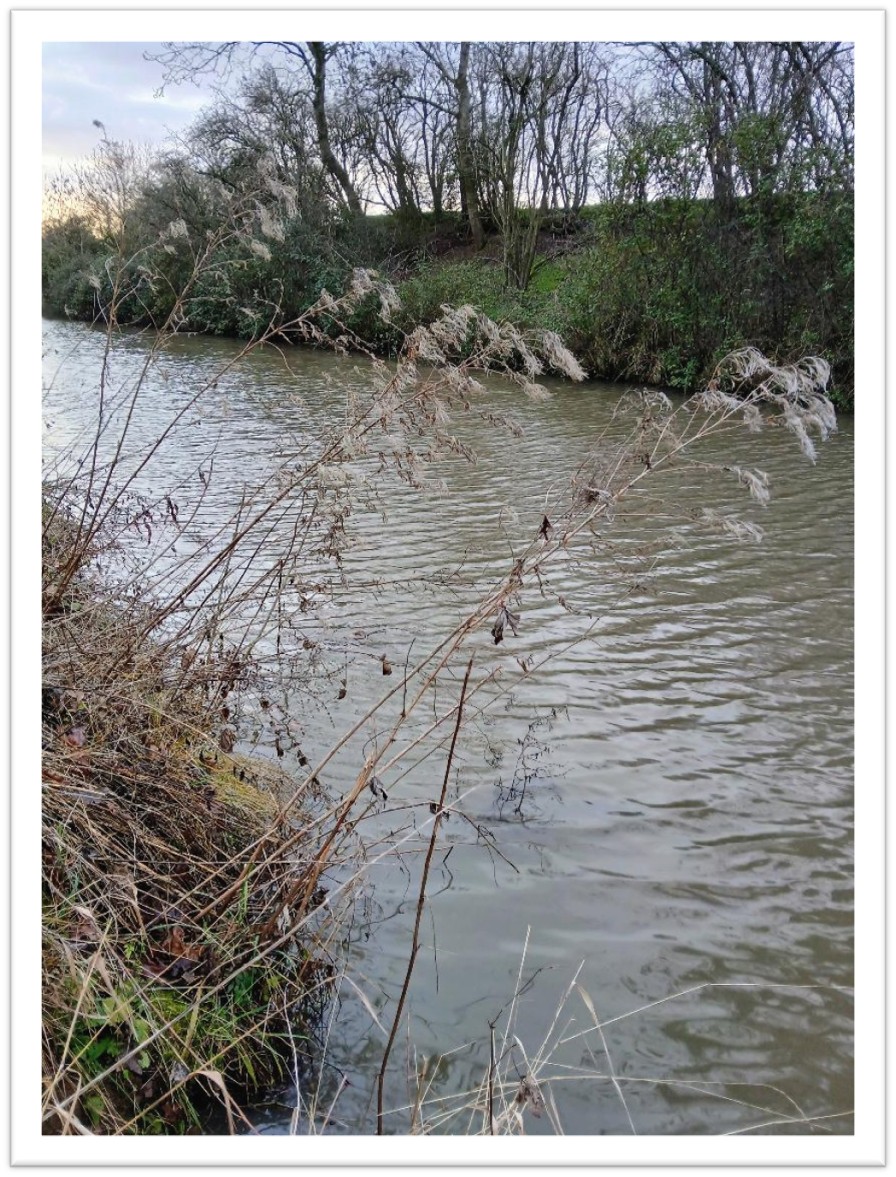 Ruffled waters of the canal in winter
In this episode I refer to Lea Leendertz’s (2024) A Year in Story and Song: A celebration of the seasons, as well as reading short excerpts from Ruth Binney’s (2010) Wise Words and Country Ways: Weather lore and John Clare’s poem ‘November.’
With special thanks to our lock-wheelersfor supporting this podcast.
Ana McKellar
Susan Baker
Mind Shambles
Clare Hollingsworth
Kevin B.
Fleur and David Mcloughlin
Lois Raphael
Tania Yorgey
Andrea Hansen
Chris Hinds
Chris and Alan on NB Land of Green Ginger
Captain Arlo
Rebecca Russell
Allison on the narrowboat Mukka
Derek and Pauline Watts
Anna V.
Orange Cookie
Mary Keane.
Tony Rutherford.
Arabella Holzapfel.
Rory with MJ and Kayla.
Narrowboat Precious Jet.
Linda Reynolds Burkins.
Richard Noble.
Carol Ferguson.
Tracie Thomas
Mark and Tricia Stowe
Madeleine Smith
General Details
The intro and the outro music is ‘Crying Cello’ by Oleksii_Kalyna (2024) licensed for free-use by Pixabay (189988).
Narrowboat engine recorded by 'James2nd' on the River Weaver, Cheshire. Uploaded to Freesound.org on 23rd June 2018. Creative Commons Licence.
Piano and
Become a 'Lock-Wheeler'
Would you like to support this podcast by becoming a 'lock-wheeler' for Nighttime on Still Waters? Find out more: 'Lock-wheeling' for Nighttime on Still Waters.
Contact
- Facebook at https://www.facebook.com/noswpod
- Instagram: https://www.instagram.com/nighttimeonstillwaters/
- Bluesky: https://bsky.app/profile/noswpod.bsky.social
- Mastodon: https://mastodon.world/@nosw
I would love to hear from you. You can email me at nighttimeonstillwaters@gmail.com or drop me a line by going to the nowspod website and using either the contact form or, if you prefer, record your message by clicking on the microphone icon.
For more information about Nighttime on Still Waters
You can find more information and photographs about the podcasts and life aboard the Erica on our website at noswpod.com.
00:00 - Introduction
00:30 - Journal entry
00:56 - Welcome to NB Erica
01:59 - News from the moorings
10:53 - Cabin chat
16:39 - In the Belly of Winter
33:01 - Signing off
33:22 - Weather Log
JOURNAL ENTRY
6th February, Friday
“A stern hatch slides back
And a head appears.
‘Has it been raining all day?’
I am asked
'Just about.' I reply.
We laugh as
I splash passed.
One of the puddles
In the field goes up to
Maggie’s tummy.”
[MUSIC]
WELCOME
It’s been a day of heavy skies and thin rains and now the night has settled, rain drops tap out uncertain messages in Morse on the towpath’s fallen leaves. Lights flicker, fracture and split on the wind ploughed water.
This is the narrowboat Erica narrowcasting into a wet February mid-winter night, to you wherever you are.
Greetings, I was hoping you’d come. It is not the weather to be outside, so come inside where the cabin is snug, the stove is warm and the kettle has sung out its welcoming song. Mind your head as you come in, shake off your wet coat, there’s a seat waiting especially for you. Welcome aboard
[MUSIC]
NEWS FROM THE MOORINGS
February filled with grey skies drips along the canal and towpath, winter-bare twigs and branches weep, and ewes, heavy with lamb and drenched fleece, stand and stare, sad-eyed and patient.
I’ve recently come across another anthology of the year to add to my collection of almanacs – listeners of old will know how partial I am to an almanac! It is called A Year in Song and Sory: A celebration of the seasons and is compiled by Lea Leendertz who has been publishing almanacs over the past few years. This is a little different and quite fun. One thing I particularly like about it is that she includes the traditions and cultural influence of Romanis in it – something which is still often overlooked.
Lea starts her section on February with the usual listing of the different names given to the month and notes the links between the Latin Februa (the Roman festival of purification – or purging) and the Latin month of Februarius in which the festival occurred. However, she also goes on to observe that in Romani the month is called Bita kaulo munthos. As tempting as it might be to translate it as, ‘the bitter cold month,’ bita kaulo munthos in fact means ‘little black month.’ An alternative Romani name is Kaulay Staur Kurkay – meaning dark four weeks.
The use of ‘kaulo’ meaning ‘black’, here does not seem to imply anything particularly negative. Lea points out that the root word ‘kaul’ (black) appears frequently in Romani language and is even used self-referentially to describe themselves, with kaulesko meaning Romani man and kauliako meaning Romani woman. Lea suggests that this is possibly a reference to their darker skins and characteristic raven-black hair. The meaning is therefore most probably referring to the long dark nights of this short month.
This year, the ‘little black month’ has arrived wrapped in water. Following a wet January, February has begun (at least) with the promise to live up to its old reputation of ‘February fill dike.’
I know that in past years I have reflected on ‘good-old’ Miles Hadfield’s observation that despite its reputation for being wet and filling dikes, February is traditionally one of the driest months. Well, this February seems to be playing to its reputation.
Turning to John Clare, which is always a good thing to do at the beginning of a month, and sloshing along the towpath mud-pools, his words ring in my ear:
[READING]
He might have been writing about November at the time, but it captures well this February.
Maggie and I slip and slide from quagmire to quagmire along the towpath where, less than half a year’s turning, I was filled with such disquiet at the banksides being so deeply cracked and bone-dry. With cat-like precision, Maggie delicately tries to pick her way round the deeper troughs as best she can. However, towards the end of the walk, even she has given up and sploshes through the glutinous sucking pools of watery mud. Once more, we are running out of towels to dry her down. The hang from hooks above the stove to steam and dry. Boots drip soily rivulets onto the stern deck. Coats hang awaiting the next foray. When they are too wet for anything they weep and drip in the shower.
I feel some sort of camaraderie under fire with the author and politician Horace Walpole who once wrote:
“26th February 1768
We are drowning again for the second winter, and hear of nothing but floods and desolation.”
The fields adjacent to the canal are waterlogged, pot-marked with sheep-hoof and boot-print. The ducks seek out the drier (or at least, less waterlogged) spots upon which to perch and preen and catch the fleeting moments of sun. The other day, I saw a moorhen chase away a female mallard with a cacophony of ill-tempered shrieks and fountains of unsettled water. I have always heard that they have quite a feisty reputation, but I have never actually seen it before. They tend to be rather demure and deferential, generally preferring to move out of the way when ducks approach – around here, at least.
Despite appearances a wet February is not always a bad thing. Ruth Binney, in her book on Wise Words and Country Ways: Weather Lore records the following piece of advice:
“If in February there be no rain,
They hay won’t goody, nor the grain.
All other months of the year
Most heartily curse a fine Februareer.”
There’s a clump of snowdrops out on the road above us, but I am enjoying the emergence of the vivid emerald of thickening new growth: Couch-grass, cow-parsley, young dock (confident and swaggering), lords-and-ladies, plantain, nettle. Signs of something stirring, largely unseen, and all the more important for that. The rich burgundy of the alders warms the damp chill of being outside. Catkins hang like pennants of hope from alder, birch and hazel. It has been a while since I have spotted a heron. I am assuming they are busy about the nest right now. Aerial combat over the fields between raptors and crows have become a little more in earnest. With the slow advance of daylight, comes the seriousness of establishing once more your foothold on life. Gone are the showy, and at times lazily half-hearted displays of acrobatics of the summer and autumn. Hunting needs to be done – even over waterlogged fields and resources are getting scarce. Nests and brooding mothers need to be protected. Sky-borne encounters tend to be short, sharp and pointed. Tempers are frayed. Unambiguous messages are sent and unambiguous messages are received. No time to be wasted in play and meaningless theatrics. Softer days and more playful skies await, but now is not that time.
Perhaps, we are not the only ones looking across the fields and woodlands for the first signs of spring.
[MUSIC]
CABIN CHAT
[MUSIC]
IN THE BELLY OF WINTER
At the beginning of this week, it was St Bride’s or St Brigid’s Day followed the next day by Candlemas.
There’s a lot of weather lore associated with this time.
“If Candlemas be fair and clear,
We’ll have two winters in one year”
Goes one rhyme
“If Candlemas day be fair and bright
Winter will have another fight;
If on Candlemas day it be shower and rain
Winter is gone and not come again.”
And one more,
“As far as the sun shines on Candlemas Day
So far will the snow blow before May.”
One final one, which I love for its specificity,
“If on February 2nd the goose finds it wet,
The sheep will have grass on March 25th.”
There are just too many variants on this theme to include them all, but all saying the same thing. If the weather on Candlemas Day is dry and sunny, that means winter will return once more. Likewise, if it is damp and rainy, winter will slowly retreat.
This belief that this particular time in the year provides a good augury for coming seasons, goes back a long time. St Bride’s/or Brigid’s and Candlemas straddle the older festival of Imbolc – possibly with the aim of replacing a pagan festival with a Christian one.
There is a particular story associated with Imbolc that picks up on this theme. It features a person called Cailleach (the ‘Old Woman’ or ‘Veiled One’). She is the goddess of winter in Irish, Manx, and Scottish mythology. A terrifying hag-like crone, reputed to be of loathsome and frightening appearance. One eyed, with wild wind-torn cobwebs of hair and an ashen-blue face, she tramps across the ice-hard land from Samhain to Imbolc. Everywhere her staff touches the ground, the ground freezes. With shrill banshee cries she commands blizzards and winter storms and bone-scouring winds with her spells. In her apron she carries rocks which she throws upon the land, creating mountains. In Ireland, she is attributed with shaping its landscape. She is a creature of storm foam and the crashing of Atlantic waves against rocky cliffs. The Cailleach represents the ferocity and the fearsome strength of winter. One story tells of how she snips away at each green shoot as it appears above ground. But mythological figures are complex and never two-dimensional. The Cailleach also carries with her, deep, wild wisdom and the instincts of the mother. Deer look to her for protection and nurture.
A popular group of stories relate to Imbolc and in particular, the weather. The stories go that, around this time of year winter is moving on and the Cailleach, dozing in her home grows restless as her thin fire to warm her begins to die down. If it dies down enough for the cold to begin to penetrate, furious, she will get up and tramp abroad collecting more sticks to fuel her winter fire. The stories tell us that if Imbolc is bright and dry, this means that the Cailleach has risen and is out collecting more firewood. This means that winter will once more strengthen its grip, as the Cailleach’s hearth blazes afresh. However, if Imbolc is wet and dull, it means that the Cailleach sleeps on, unheeding of springs advance and the push of new green growth along the hedge-lines. While she sleeps, spring can strengthen her hold and winter cannot return.
Candlemas and Imbolc (falling this year on the same day) proved to be mildish, but distinctly grey and wet. Does this mean that winter is on its slow retreat? I am not going to hold my breath!
Imbolc is one of those events that has recently gained popularity once again. Maybe, it’s just the algorithms but I saw a lot of posts about it online. There seems to be a lot of investment, perhaps understandably, being placed in its promise of Spring and the retreat of winter gloom this year. We’re now roughly halfway between the winter solstice and the spring equinox. The season’s shift has turned. The tide of light is returning and the sap once more is rising. But we also need to understand that this is mid-winter – to hold the promise, but to be patient. I am not sure whether Imbolc, in its original sense, was ever about ‘the beginning of spring’, it was the promise that even in the belly of winter, spring is coming. Don’t give up hope, it will return.
Alongside all the posts about Imbolc were explanations about from where the term actually derives. The truth is, like many of the older traditions, we don’t know. One guess, is that it refers to animals (particularly livestock – sheep, goats, and cows) coming into milk again. More recent guesses, that are becoming more popular, are that it means ‘in the belly’ – a reference to this traditionally being the time when ewes are in lamb. And I have to say, I do feel drawn to this – not because of etymology, but that it fits with the way I have been feeling.
This time, at the heart of winter and the long dark nights and the dragging chill of dull shadowless days. This time we’re in; mid-winter; in winter’s belly. It chimes loudly with me, at the moment. Every day, I make my way through the soggy fields being watched by the cautious eyes of ewes in lamb. I catch their eye and wonder; wonder what are they feeling? This momentous thing that is happening right inside them. The weight of carrying new life. They might not comprehend it in those terms – although we have no good evidence that they are not aware of what is happening. Their behaviours certainly seem to change.
And that life inside – the lamb forming and being nurtured, while outside, the relentless rain beats down upon a dark world turning to water. Imbolc. What world will it be that will greet this young life, safely nurtured until it is fit and ready to emerge?
The sheep continue to graze, nourishing the life forming within them. The rain sweeps in again, washing the hillside, slick with churn and trod. Those wary, cautious eyes watch me, mouths moving continuously like bored adolescents chewing gum. The rain drips off their fringes; their fleeces cling and sag, heavy and lifeless. Around each foot, muddy pools of water form. Their supple lips grip and pull at the close-cropped grass. Rooks gather and fish for drowning worms and to pluck stray strands of wool from their backs for their nests. And inside them, a life (maybe two, maybe even three) grows stronger – awaiting to enter this world of storm and water.
And, right now, I feel a strange affinity with those lambs in the belly; Imbolc. In the belly of winter, awaiting our own births, of sorts. Being born into this coming year.
As I read the different online posts each celebrating Imbolc and written by someone sharing the darkness of their uncertain world and looking/longing for the vernal light to once more dawn, I recognise my own experience in them. It’s been a long hard winter for many of us and the coming year will birth us into a world of which we are unsure. As lambs, yet to be born, nestled in the long darkness of Winter's belly, we wait for the coming world. A world that, this year, feels brutish, without colour and filled with harsh noise and turmoil. Perhaps that's why, like many, I have been struggling this year. Those familiar dreams and pangs of longing for the softer days of spring days, rich with green pastures and warm sunshine are still there, but this winter has brought relentless storm after storm of disquieting news that can unsettle, create uncertainty, and can so easily give rise to a sense of paralysis and dread.
One thing I have learnt is to treat your night-time fears lightly. Things always look worse in the middle of the night, when your bed becomes filled with the shards of dark thoughts. I think that is the same for winter too. The summer sun has a way of chasing away the winter fears and putting them in their place.
Imbolc is not so much about the return of spring. It could never be, not balanced, as it is, halfway between solstice and equinox – deep in the heart of winter. This is Cailleach’s territory. If you feel her chill in your marrow, that is not surprising. Imbolc could never be anything more than marking this midpoint of winter – and yet, it is. The stories continue to tell us, even when we have grown blind and deaf to the signs all around us in this dripping world. Imbolc is also a promise – an appeal to trust. The mother in the Cailleach cannot be repressed for ever. This is a harsh, dark time – yes. Ask the sheep on the hill above, lying with steaming breaths under the hedges. This is, after all, the Cailleach’s time. And this year, maybe, so many of us wait in its darkness filled with apprehension and a sense of foreboding about what the year will bring. Winter can be a hard time, under the Cailleach's weathered eye, but there is also nurturing too. We are born into the swings and cycles of the seasons. We instinctually know how each one feeds us. Imbolc tells us that winter is not over, not yet. But now is not the time to fight it, maybe now is the time to lean in to it. Read its cues and whispered wisdoms. Take time to close the door, turn off the lights, nest deep in the wisdom beneath your racing thoughts, listen to the way your breath finds freedom in starlight and bird song, rain dance and wind howl. Let strong silences speak and deep call out to deep. As restless lambs turning in the belly of their mother as she grazes the thin grass in winter rain, we too can be sustained by these times, wrapped in the mothering belly of winter.
Imbolc tells us that although the winter is not yet over, its days are numbered. Trust. For even then, here in the depth of winter the promise of spring rises. The summer sun will return; spring is on its way. Even now, in the belly of the winter, the tide has turned. Right now, this is the time to be nurtured by winter. To recognise, that the coming challenges are for future days, for days that there will be strength and wisdom for. Right now, its Imbolc. The time for growing, for rest and to gather strength.
Sleep tight Cailleach,
There is no need to be
Gathering wood today.
For there is work enough ahead
And we'll be needing your wisdom,
Born from taproots
And briar's thorns,
More than ever before.
SIGNING OFF
This is the narrowboat Erica signing off for the night and wishing you a very restful and peaceful night filled with sweet dreams. Good night.