The Seventh Word (Reflections on canal-life - 2)
In tonight’s episode, with the help of a few of our listeners, I continue to reflect on life aboard the Erica and how it might have changed our lives as well as go on a hunt for the elusive 'Seventh Word'. There is often a lot of talk about how canal-life is helpful for mental wellbeing. Is this really the case? We also go in hunt for some mysterious bramble cutting vandals. Journal entry: 21st February, Saturday “A silvered dawn. Milder air With the promise of S...






In tonight’s episode, with the help of a few of our listeners, I continue to reflect on life aboard the Erica and how it might have changed our lives as well as go on a hunt for the elusive 'Seventh Word'. There is often a lot of talk about how canal-life is helpful for mental wellbeing. Is this really the case? We also go in hunt for some mysterious bramble cutting vandals.
Journal entry:
21st February, Saturday
“A silvered dawn.
Milder air
With the promise of Spring.
Plum blossom and cowslips.”
Episode Information:
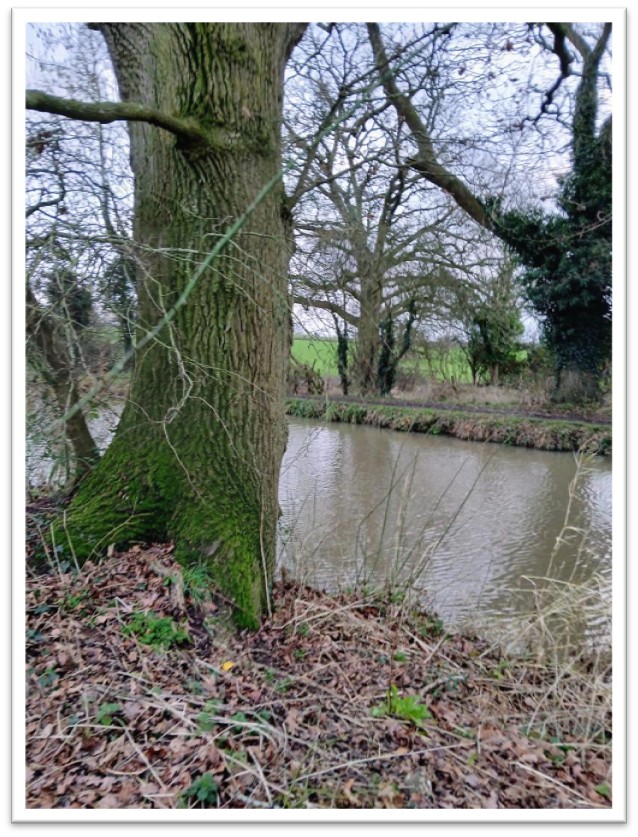
The trees beside the canal stand waiting patiently for Spring
In this episode I read two short poems by Wendell Berry; ‘Song (2)’ and ‘Woods’. I also refer to a line by WH Auden from his poem ‘Herman Melville’.
With special thanks to our lock-wheelersfor supporting this podcast.
Ana McKellar
Susan Baker
Mind Shambles
Clare Hollingsworth
Kevin B.
Fleur and David Mcloughlin
Lois Raphael
Tania Yorgey
Andrea Hansen
Chris Hinds
Chris and Alan on NB Land of Green Ginger
Captain Arlo
Rebecca Russell
Allison on the narrowboat Mukka
Derek and Pauline Watts
Anna V.
Orange Cookie
Mary Keane.
Tony Rutherford.
Arabella Holzapfel.
Rory with MJ and Kayla.
Narrowboat Precious Jet.
Linda Reynolds Burkins.
Richard Noble.
Carol Ferguson.
Tracie Thomas
Mark and Tricia Stowe
Madeleine Smith
General Details
The intro and the outro music is ‘Crying Cello’ by Oleksii_Kalyna (2024) licensed for free-use by Pixabay (189988).
Narrowboat engine recorded by 'James2nd' on the River Weaver, Cheshire. Uploaded to Freesound.org on 23rd June 2018. Creative Commons Licence.
Piano and keyboard interludes composed and performed by Helen Ingram.
All other audio recorded on site.
Become a 'Lock-Wheeler'
Would you like to support this podcast by becoming a 'lock-wheeler' for Nighttime on Still Waters? Find out more: 'Lock-wheeling' for Nighttime on Still Waters.
Contact
- Facebook at https://www.facebook.com/noswpod
- Instagram: https://www.instagram.com/nighttimeonstillwaters/
- Bluesky: https://bsky.app/profile/noswpod.bsky.social
- Mastodon: https://mastodon.world/@nosw
I would love to hear from you. You can email me at nighttimeonstillwaters@gmail.com or drop me a line by going to the nowspod website and using either the contact form or, if you prefer, record your message by clicking on the microphone icon.
For more information about Nighttime on Still Waters
You can find more information and photographs about the podcasts and life aboard the Erica on our website at noswpod.com.
00:00 - Introduction
00:25 - Journal entry
00:46 - Welcome to NB Erica
01:50 - News from the moorings
07:42 - Cabin chat
13:36 - The Seventh Word
13:40 - 'Song (2)' by Wendell Berry
16:25 - 'Woods' by Wendell Berry
34:17 - Signing off
34:33 - Weather Log
JOURNAL ENTRY
21st February, Saturday
“A silvered dawn.
Milder air
With the promise of Spring.
Plum blossom and cowslips.”
[MUSIC]
WELCOME
There is a soft sou’westerly blowing along the canal and playing hide and seek with a young crescent moon that hangs low in the west. Catkins and reeds quietly lean with the wind-flow and the canal is keeping its counsel tonight.
This is the narrowboat Erica narrowcasting into the darkness of a February night to you wherever you are.
Welcome. It is so lovely to see you. I was hoping you’d come. The air is mild and the night is alive, but the towpaths are muddy and slick. So come inside where the kettle is singing and the biscuit barrel is beside a warm stove. There is a seat waiting especially for you. Mind your head as you come in and welcome aboard.
[MUSIC]
NEWS FROM THE MOORINGS
The weather patterns for this year continue; cycling between mild and chilly, still and windy, with the only constant being heavy skies and persistent waves of rain. Last week, the wind veered northerly once more, bringing a bracing rawness with it that made the cosy warmth of the boat cabin an even more attractive prospect. However, within the last day, a milder airstream has arrived. The paths are still churned mud and the fields along the canal-side are still waterlogged, but the suggestion of fairer days is there. The portents of spring to come.
Another Spring portent has been evident recently. All along the towpath, thin whips of new-growth bramble, neatly clipped, lie strewn among the mud and leaf mould. I see it, around this time each year, and each year, I glower and grumble at the crass ridiculousness of it. Who on earth is doing it? Cutting this first flush of new life, trimming the towpaths into the sterile landscape of a formal garden? What type of people come to somewhere wild, bringing with them their secateurs to impose their perceptions of tidiness onto it? For goodness’ sake, they’re not even encroaching on the path proper, or hanging low to snag a designer woollen beanie. Later in the year, when thick bramble vines, dragon thorned, cast snares along the way, I can understand – within reason, but this seems so pointless. I’ve spent a lot of time fuming about this. But then, this year, it has suddenly struck me. I have not actually seen the culprit, but I have a very good idea who it is. It was Maggie who first put me on to it – finding the clue that eventually (I think) broke the case. Normally, she wanders along the towpath with nose to the ground, but along this stretch, particularly recently, she trots looking up into the canopies of the row of oaks that reach out over us, and which make it such an idyllic spot in rain and sun. This is squirrel haven – shapes dart and leap – flying from branch to branch. Of course! It makes total sense. The neatly snipped bramble twines that look so much like the work of well-maintained Sheffield steel, also resemble the viciously sharp work of a pair of incisors. I check my copy of Bang and Dahlstrøm and, while it doesn’t mention brambles and squirrels, the bite profiles match neatly. Suddenly, this litter of young briar stems looks so different. No longer does it fill me with an annoyed irritation at needless vandalism and arrogance, I look at each twine and imagine the attention behind its cutting, the tiny fingers that held it as sharp teeth gnawed through it. The litter is no longer litter, it is a sign of life, a sign that the seasons are turning, a sign that this is how things should be.
It’s a good lesson to be reminded of. How assumptions and perceptions can change something. How things can so easily be misattributed. The waste of anger – the needless suspicion that can cast an edge to my ‘Good morning’ when I come across groups of walkers along this stretch of towpath. Perhaps even, realising how ideas of what constitutes vandalism and waste can change. These young stems, still lie discarded, unused in the mud. Cast aside. Useless. So why, in this instance, does the fact that – as far as I can tell – it was made by a squirrel or a group of them make it okay, but not if it was cut by a well-meaning, but (in my view) misguided walker?
[MUSIC]
CABIN CHAT
[MUSIC]
THE SEVENTH WORD (REFLECTIONS ON CANAL-LIFE – 2)
[READING]
That was ‘Song (2)’ by Wendell Berry and it was sent to me by Lee Thomas in response to the episode before last when, having noted, how this was amazingly our sixth winter afloat and I began reflecting on how life has (and has not) changed since we moved aboard the Erica. The main point was that both Donna and I felt more ‘at home’ here than anywhere else that we have lived - as happy as those times often were.
It also made Lee reflect on the life that she has chosen to lead, in an old cabin far up in the foothills of the Colorado Mountains. In many ways, the practicalities of her life and those of ours on a boat resemble one another: the physical aspects of this type of life, as well as the need to plan ahead and prepare (short-term and longer-time). But also, living in proximity to the elements and the lives (non-human) that are lived so closely around.
It’s Lee’s first and only home, in which she has lived for, if my maths is correct, for nearly 40 years? Here, life can be seriously challenging. In her email, she wrote: “Today, for instance, it is just 13 degrees F in the afternoon, snowing, with a cold wind blowing at about 22 MPH. That's a wind chill of -3 F, and with the temperature tonight forecast to drop to -3 with winds up to 24 mph, that means a -20F wind chill. Cold and wind make it impossible to warm this house up very well, so I am bundled up in 3 warm layers and sometimes have also wrapped up in a blanket.”
However, nevertheless, Lee can conclude; “I, too, have never felt so at home as in this difficult little house.”
The next poem she included, also by Wendell Berry struck a particular note with me:
‘Woods’
[READING]
It seems to me that these two poems, Lee’s reflections, together with what I was trying to explore in that episode is the way in which ‘home’ is far greater than place. Quite often the place itself may be far from perfect and living within it can be challenging and, at times, uncomfortable. Nevertheless, it creates an environment in which you can feel at ease, true to yourself and – I think, as importantly – true to everything around you. It is a sense of belonging, being a part of, and yet recognising the luxury that being a part does not necessitate the requirement of being indispensable to the whole. Some of the ducks, the little group of 10 plus 2 that collect along this stretch of the canal look up and respond in part to me now. They’re not tame to me (I’d be deeply uncomfortable if they were), but they are not scared of me. We brush along together sharing our home, the channel of water between churned mud, trodden grass, and newly-grown green. I know the day when I am not here, their world will not significantly change. In fact, the weather has more effect on their lives than me. And I relish that. I may try to do small incidental things that makes their lives a little easier, but they are not dependent upon me. Home is where we can afford to be ourselves, even to let the imperfectness of who and what we are show, with the security of knowing that those around accept us for who we are.
That comment that we feel more at ‘home’ here, seemed to strike home with many of you and I received a lot of really wonderful comments – about that particular feeling, that is perhaps so familiar and yet so hard to define in words.
I really loved Hannan Cohen’s comment on Mastadon; “Uncharacteristically of you, you searched for a word to describe your feelings, and the word that came to my mind was "whole". That's a very good thing to be.” Yes, ‘whole’ is a really good word and I think I feel more whole than I have ever before. My main reservation would be ‘whole’ like ‘complete’ carries the implication of something completed or finished – and it doesn’t quite feel like that. I am still at a place in my life where the forward movement, the continued journey is not just important, but inherent. However, there is a sense in which wholeness which is not primarily about emotion – it moves beyond a defined emotion and is not rigidly forced into a specific emotional response and I do like that. I do like words that become too big to be imprisoned by their definitions. I remember listening to a Hebrew professor describing the vast semantic range of the tiny Hebrew word ‘tov’ – normally translated into English as ‘good.’ Under his exposition, the simple statement following each creative act in Genesis 1 – ‘and it was good’ culminating in the final ‘and it was very good’ blossomed into a rich lexical garden of meaning and colour that would rival any found in the next chapter to describe Eden.
Finding the right word also got Margaret thinking. Over the time of this podcast, Margaret has shared with me her deep interest in words, linguistics which she gained from her time at university – particularly in relation to early English and Anglo-Saxon. Following the episode, and particularly my use of the words ‘happy’ and ‘content’, she wrote to tell me how her “finals engaged with a piece of research into comparative/computational linguistics. So, we determined a group of 7 words with similar but also different meanings and produced a thesis on the comparisons, similarities, differences, nuances etc and how we computed them into our own usage. My group of words was 'love, cherish, worship, adore, honour, respect and like'.”
Margaret went on to write; “So now, because I still like working with words in this way, I'm producing myself a new list which so far includes, ' happy, content, satisfied....and maybe ....pleased, delighted, fulfilled ..........looking for a seventh word…”
Hannan, I mentioned to her your suggestion of ‘whole’ which she felt could fit really neatly into it.
However, what I like most of all, is how – at the moment – it remains unfound. The feeling, the experience, is there and real enough, but it remains – for now at least – unnamed. The Seventh Word – the part of us and our experience that refuses to be contained, to be pinned like a butterfly onto the corkboards of our lexicons. Perhaps, we all have, in some way, that experience, of looking for that ‘seventh word.’
So, has living on a boat had any real impacts upon how we see ourselves and how we see the world? As this is about boat life, I feel almost obliged to use the current language that is so much in vogue over the last few years on social media and amend that question to ‘has living on a small boat’ or even ‘a tiny home’ made any lasting changes? But at 58ft, the Erica has never felt particularly small to me. Contained, yes, and it’s true that there are quite a few cramped corners and spaces, but I’ve never really thought or considered this small or tiny living. Just, I suppose, living in more of a considered way. So, I’ll stick with the way I started. Has living on the boat changed me mentally and the way that I look at the world?
The quick answer would be undoubtedly yes. However, like the answers in the previous episode, I would also have to add, but I think it is a bit more complicated than that. As far as a sense of mental wellbeing is concerned, life afloat does make a positive difference. When I am able to work from home, when I get stressed or need to still my head, being able to just slide back the stern hatch, just behind the desk here in the study, and go out and stand in fresh air and watch the wind play among the reeds and across the water’s surface, look at the ducks doze in the sun or land in a rush of air and crystal water drops. It really helps.
But I am also aware that I have had my worst time, mentally, while being afloat too. Also, like many, I have been struggling this year. I guess, what I am trying to say is that, life afloat can help but it is not a complete cure-all. While your surroundings change, it is still the same ‘you’ that is living within it.
The truth always is that wherever you go you will be bringing your shadows and ghosts with you. Even here, you cannot out run them. Canal-life is not a panacea and, despite the way canal-life is often presented in the media, I am wary of recommending it as the silver bullet for anyone struggling with their mental health. There are plenty of aspects about this life that could make it much worse. There is a lot of talk about ‘nature as healing’ and the way that being outdoors helps with mental-health wellbeing. But that is only half true – or possible a third true. The most difficult challenges that I currently face with my mental health arise from my living so close to it.
However, it should be said that there are as many stresses and worries as there are living anywhere, they might just be called by a different name. The end result though, is the same. There is no difference in depth or shade in the worry caused by mortgage or rent, to the worry about mooring fees or boat licence. Having a mandatory four yearly inspection for boat safety is important, but can also feel intrusive, routine maintenance can also, at times, feel onerous and never ending. Job lists never get fully finished as more items are constantly added. Keeping an eye on the electrics, a constant eye on leaks (usually above the waterline), not being able to see a third of the boat until you can take it out of the water and a hundred and one other little stresses can add up. And worry is worry wherever you are. A beautiful sunset that turns the water to fire never looks quite as ‘Instagram pretty’ when you have noticed a creeping damp patch on the floor or that the battery level is unexpectedly low.
It is very tempting to think of this kind of life as ‘getting away from it all.’ I think that that is one of the reasons why many people chose this life, to some extent, us too, but, in reality, that is never really the case. Although a part of me recognised this before we moved aboard, the way that ‘life outside’ or ‘land-life’ still manages to impose itself took a bit of getting used to. There is often talk about this type of life in terms of nomadism, off-grid, even hermitic; a way of casting off the shackles of modern life and living wild and free under the sun and wind and starlight, where we can trundle, at less than walking speed, up and down the canals untouched by the rush and madness of modernity. However, land-life still has a way of impinging, of reminding you, that it still has a hold, of sorts, on you. The lack of a postcode can make the necessary interactions with bureaucracy and officialdom, and even some types of commerce stressful – added to which canal-time and land-time don’t always sit comfortably together.
Whilst living here, does create a sense of distance and being somewhat a part, and the pace of life is definitely slower, I have to say that I think the me of 6 years ago might be a little surprised by how much I do NOT feel part of an alternative life and how entangled I still feel within a world whose values and goals I profoundly disagree. This realisation has made me think again about my expectations and assumptions and I am now not sure that this sense of entanglement, as uncomfortable and challenging as it is, is a particularly bad thing anymore. There is a messiness to all of life – and I am growing ever more suspicious of constructed divisions and polarities.
Are there any clear conclusions? Maybe, as with the previous episode, the changes have now become so normalised into our lives that what might appear strange or different, no longer feels that way. It just feels like home. And the stuff of life goes on – whether on land or water, or straddled awkwardly between both (which is where I often feel the most).
I think the general trends are the same – they just are a little heightened at times by being on water and our lifestyle. Nothing can throw into sharp relief the emptiness of the consumer dream when you live in a home that has no room (literally and figuratively) for the torrent of commodities that they went to sell you. Nothing can remind you of the real world behind the digital screen than the sound of wind among the alders or the gentle rock of the boat as a north-easterly wind barrels along the canal, or watching cygnets struggle out of their eggs and being nuzzled by the beaks of their mum and dad.
But it is home. And I am grateful for that and cannot imagine a place I would rather be. It is not perfect; it can be a life filled with messy sometimes unsatisfactory compromise. But then, that is what our lives are about, right? We try to do what the best thing is in our current situations.
Possibly best way to end this is a line of two from WH Auden that Lee felt sums up how she feels about the life that has found her – and I too can feel its complicated truths here, in mine, too.
"This rock is Eden.
Shipwreck here."
And then of course, there is that Seventh Word… the sense, the feeling is there and real enough, but the search for it continues – and long may it continue.
SIGNING OFF
This is the narrowboat Erica signing off for the night and wishing you a very restful and peaceful night. Good night.