Between the Borrowing Days
Join us on a noisy and stormy night of high winds at the tail-end of winter as we contemplate the messiness of these between times the lie at the edges of the seasons. In a world used to binaries, these times can feel messy, frustrating and even unsettling. The old idea of ‘borrowing days’ helps us to navigate these ‘untidy’ seasonal borders in a different way. Journal entry: 30th March, Monday “Sometimes, The canal is silent Biding time Keeping counsel. Don't ask Let ...






Join us on a noisy and stormy night of high winds at the tail-end of winter as we contemplate the messiness of these between times that lie at the edges of the seasons. In a world used to binaries, these times can feel messy, frustrating and even unsettling. The old idea of ‘borrowing days’ helps us to navigate these ‘untidy’ seasonal borders in a different way.
Journal entry:
30th March, Monday
“Sometimes,
The canal is silent
Biding time
Keeping counsel.
Don't ask
Let things be.
At other times,
It reaches out
With whispers
That sing soft and low
Holding memories
Of old friends.”
Episode Information:
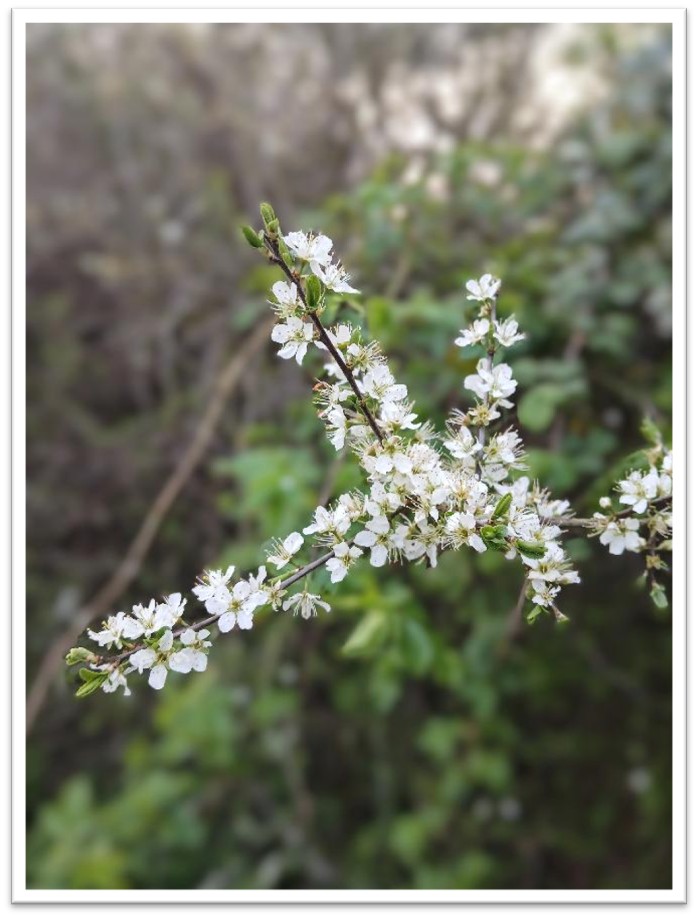
Blackthorn blossom along the towpath giving way to its flush of leaves
In this episode I recommend Jen Ratcliffe’s interviews for the ‘Water Book Club’ on her Mess in a Boat Substack.
I also read an extract from Bridget Haggerty’s post on the Irish Cultures and Customs website.
I also refer to material from the website for The Shetland Museum and Archives.
With special thanks to our lock-wheelersfor supporting this podcast.
Ana McKellar
Susan Baker
Mind Shambles
Clare Hollingsworth
Kevin B.
Fleur and David Mcloughlin
Lois Raphael
Tania Yorgey
Andrea Hansen
Chris Hinds
Chris and Alan on NB Land of Green Ginger
Captain Arlo
Rebecca Russell
Allison on the narrowboat Mukka
Derek and Pauline Watts
Anna V.
Orange Cookie
Mary Keane.
Tony Rutherford.
Arabella Holzapfel.
Rory with MJ and Kayla.
Narrowboat Precious Jet.
Linda Reynolds Burkins.
Richard Noble.
Carol Ferguson.
Tracie Thomas
Mark and Tricia Stowe
Madeleine Smith
General Details
The intro and the outro music is ‘Crying Cello’ by Oleksii_Kalyna (2024) licensed for free-use by Pixabay (189988).
Narrowboat engine recorded by 'James2nd' on the River Weaver, Cheshire. Uploaded to Freesound.org on 23rd June 2018. Creative Commons Licence.
Piano and keyboard interludes composed and performed by Helen Ingram.
All other audio recorded on site.
Become a 'Lock-Wheeler'
Would you like to support this podcast by becoming a 'lock-wheeler' for Nighttime on Still Waters? Find out more: 'Lock-wheeling' for Nighttime on Still Waters.
Contact
- Facebook at https://www.facebook.com/noswpod
- Instagram: https://www.instagram.com/nighttimeonstillwaters/
- Bluesky: https://bsky.app/profile/noswpod.bsky.social
- Mastodon: https://mastodon.world/@nosw
I would love to hear from you. You can email me at nighttimeonstillwaters@gmail.com or drop me a line by going to the nowspod website and using either the contact form or, if you prefer, record your message by clicking on the microphone icon.
For more information about Nighttime on Still Waters
You can find more information and photographs about the podcasts and life aboard the Erica on our website at noswpod.com.
00:00 - Introduction
00:27 - Journal entry
00:59 - Welcome to NB Erica
02:25 - News from the moorings
06:51 - Cabin chat
11:53 - Between the Borrowing Days
26:44 - Signing off
27:05 - Weather log
JOURNAL ENTRY
30th March, Monday
“Sometimes,
The canal is silent
Biding time
Keeping counsel.
Don't ask
Let things be.
At other times,
It reaches out
With whispers
That sing soft and low
Holding memories
Of old friends.”
[MUSIC]
WELCOME
It’s a wild night tonight. The wind is howling among the alders and ash, as the Erica gently rocks and creaks at her mooring lines. The calendar hung from the study’s bulkhead slowing swings from side to side. The barometer has dropped and the isobars tighten and the rooks ride the storm-tossed treetops in their ragged piratical nests.
This is the narrowboat Erica narrowcasting into the darkness of a stormy April night to you wherever you are.
It is so lovely to see you. I was hoping you'd be able to make it tonight. How are you? Come inside out of the wind. It is forecast to gust up to fifty-five miles an hour with lashing rain to boot. So don't stand around outside (even though it is rather lovely). We're warm and cosy. The kettle is whistling, the biscuit barrel is full and there's a seat that is especially waiting for you. Come inside and welcome aboard.
[MUSIC]
NEWS FROM THE MOORINGS
“April come she will.
When the streams are ripe and swelled with rain.”
So wrote Paul Simon. The incessant rains have abated, at least for a while, but the streams are ripe and the canal water here lies high. There’s a pool of bluebells unfurling just down from us – still young in their impossible blue and the mat of leaflitter is submerging under a vibrant thick carpet of emeralds and jades. It is easter and the towpath sings its siren song to all those who will come. For the last couple of days, long straggling processions of walking groups have progressed passed us. Maggie and I, weave our way through the throng, dodging bikers and pushchairs. Groups gather at gateways to pause and watch the ewes with their young lambs. Magpies cackle and pigeons bluster among the branches above. Buzzards and kites wheel to the rook sentries’, perched high and precarious, shouted warnings and outraged cries.
It’s been a benevolent winter for most. Scarlet berries of haw, from last autumn’s profusion, still hang in little clusters, untouched. Many rosehips also remain. Although they are looking much worser for wear, dimpled with hollows, dull red turning to brown. The hedgerows still billow white with blackthorn, but the blossoming is almost over and gradually giving way to the lime green flush of leaves. Elsewhere, a haze of deeper richer greens casts a bloom along the bare hedgerow branches. Privet, hawthorn, tight whorls of budding elder. Glossy ivy leaves catch the sun like polished bonnets of Bentleys in British Racing Green. The brown strip of beaten earth that lies at the edge of the path, canal-side, has suddenly become, once more, thick and verdant with new growth; nettle, dock, alum, cow parsley. Fountain plumes of hemlock leaves of water dropwort, spout in gushing green geysers.
The canal, itself, has also become busier. There’s been a lot of boats on the move. It’s good to see, particularly after last year. The bumble of an engine at tick over, a smile, a wave or two, sometimes a shouted greeting. Holiday hires, with the obligatory ‘captain’s hat’. I love the enthusiasm and joy. A day boat eases under one of the nearby narrow bridge holes. Maggie watches with a critical eye. As they come out the other side without so much as a scrape the boat erupts with cheers. Maggie takes it that the cheers are as much for her as they are for the skilled helmsmanship. People from all walks of life converge on this narrow strip of water, sharing something special. Making memories. There’s got to be something precious about that!
The canal doesn’t choose who comes to its still waters, but it does choose those who stay.
[MUSIC]
CABIN CHAT
[MUSIC]
BETWEEN THE BORROWING DAYS
The threads of Winter’s skirts are unravelling. Although there is still enough remaining to cast its edge upon the air, and scatter a few ice crystals on the morning fields, from time to time. This is the in-between, the borderland between the Anglo-Saxon bastions of Winter and Sumor when Britain only had two seasons and dark winter held sway to the yearly incursion of sun and warmth.
As humans, we seem to be good at identifying warfare and battle everywhere – even when it really isn’t justified. Perhaps it soothing to feel, it is not just us. We are not alone in our propensity for violence and conflict. We can’t be so bad, maybe it’s just natural. Look! Even above us, the clouds race in advancing fronts across the great meteorological battlefield of the sky. The terminology is deliberate – coined by meteorologists looking at the lines of blood-soaked trenches along the battlefields of the First World War to describe the dancing movement of air masses above us.
You have to give it to us, it’s not always easy seeing battle and carnage in the weather or in the passing seasons, but somehow, we manage it. And in this battle, mortally-wounded winter bleeds blossom and birdsong.
Winter’s hinterland.
And there’s something messy and potentially unsettling about borders, margins. After a couple of days of sunshine and a gentle permeating warmth, we zip up our winter coats to the fresh north-westerly that flings gravel-like hail in our faces and growl, “I thought Spring was supposed to have come.” And we hold it as a personal affront as if some breach of contract had occurred. I too catch myself. “It’s only April 2nd!” I have to tell myself.
Spring, like the filling tide, doesn't come all at once, but in tiny waves. Wave upon wave, gradually possessing the land. First the celandine and aconite, then the blackthorn, then the snowdrop and crocus. Each little lapping wave lifting Spring’s tide higher and higher. It takes time for the sleeping soil to awaken. That drowsy, muddled and disordered time. The disorder and unpredictable unruliness of the liminal, the borderland, where things aren’t cut and dried. It keeps us on our toes.
I’m not sure why this can so often feel so strange to us? Why do we seek to find solace in dualities of either or? Either one thing or the other. No in-between. The Cartesian dualism that has seeped and bled into all parts of our culture – it’s politics too. Off-on, good-bad, right-wrong, dark-light. Neatly fitting our tick box bureaucracy. Knowledge becomes information. Information can be processed using noughts and ones. I know what a thing is and, importantly, I know what a thing is not. Woe betides if it falls someway between the two. It’ll implode the system and chaos will descend. Colour between the lines.
But then, look around us and this binary way of seeing things becomes so foreign, so alien. Step outside the human bubble for even a few steps and the arbitrary dividing lines that delineate knowable facts falls apart with each step. We stab pencils into our calendars to mark the date when one season stops and another starts. But all the long, we know in our heart of hearts, it doesn’t really mean a thing. The edges are frayed, blended, softened by shadows. Spring seeps into winter until one day, we realise it is here and we have discarded our heavy jumpers and scarves. High Tide or Low Tide? The reality is that for most of its time the sea is somewhere in between the two.
At the beginning of this week, it was the ‘Borrowing Days.’ It’s a name given to the final three days of March. It’s new to me. Or, if I have heard of it before, I’d forgotten it. ‘Borrowed days’ seems to fit so well this time of year that I am surprised that it has escaped my notice for so long.
The term relates to old songs and stories, generally associated with Ireland and Scotland, that tell how the volatile and impulsive wintery month of March begged (or borrowed or even stole from) the good natured, bountiful month of April three of her days and so extend her own rule for three further days.
There are elements of the Cailleach legend in it. This isn’t surprising as this too appears to have its roots (if not its origins) in Irish and Scottish mythology. As we hear, a couple of episodes back (In the Belly of Winter), there is a tradition associating the Cailleach the hag-like symbol of Winter with Imbolc. A warm and dry Imbolc means the Spring is a false one and Winter will return. Furious at the encroaching occupation of Spring, she will storm out, cutting each blade of green new-growth that is thrusting out of the soil and leaf mould in order for her reign over the land to continue for a few weeks more.
Winter seeks to extend her reign against the onslaught of Spring is at the heart of the Borrowing Days of March.
Sir Walter Scott recorded that ‘the last three days of March are called the borrowing days; for as they are remarked to be unusually stormy, it is feigned that March has borrowed them from April to extend his sphere of his rougher sway.’
One Scotch verse reads:
March borrowed from April
Three Days, and they were ill:
The first was frost, the second was snaw,
The third was cauld as ever’t could blaw.
The idea leans into the old weather lore of Equinoctial Gales; wind storms often encountered around the Spring and Autumn equinoxes. Meteorologically, weather records don’t really support this belief.
A variation of this is found within Irish folklore where the borrowing days relate not to the end of March, but to April.
Bridget Haggerty, on the Irish Cultures and Customs website writes
“The old brindled cow boasted that even the rigours of March could not kill her, whereupon March borrowed three days from April and using these with redoubled fury, killed and skinned the poor old cow. Henceforth, the first three days of April traditionally bring very bad weather and are known as …, the Borrowed or Borrowing Days, the Skinning Days, and other names.”
I have also come across versions it was an old hubristic pig rather than an old brindled cow who boasted that Winter had been unable to kill him off. However, the consequence was the same.
Bridget Haggerty goes on to refer to another old version in which, this time, the borrowing days fall into the middle of April. She quotes:
[READING]
At the heart of all these variants are truths and lessons. Warnings against pride and underestimating the power of the elements It also points to harder times when the coming of winter was something to be feared. I remember in one really early episode talking about the fear that could be felt in the writings of the diary writing clerics (like Francis Kilvert) when noting the oncoming Winter and the plight of those who were vulnerable in their care. On a more general note, it is a way of articulating that exact unruly messiness of these marginal borderland times that I was describing at the beginning. The placing of these days later into April also makes sense as they fall in the traditional timing of the notorious ‘blackthorn winter.’ The time around April 12th has long been associated with another (now rather derided) weather phenomenon, the second of Buchan’s six Cold Spells, this one falling between April 11th and 14th. Although, this year whilst still very much in evidence, locally at least, Blackthorn blossom has already reached its peak.
The Shetland Museum and Archives site records one more variant on all of this.
Returning back to the last three days of March, they write:
“The borrowing days are days borrowed from the future. These days are perhaps the most important days of weather watching in our calendar. The weather of each day predicts what the weather will be like in upcoming months. The 29th is said to have been borrowed from May, the 30th borrowed from June, and the 31st from July.”
Like Imbolc, like St Swithin’s Day, and countless other lesser days associated with weather lore and prognostication, dotted through our calendar, an attempt is made to feel a little less at the whim of weather. We might not be able to control it, but we can at least predict it. Truculent March comes out of all this a little better, anyway. We’ll see how it goes. If my memory is correct, the 29th was sunshine and showers, the 30th was dry, overcast and windy with a northerly bite to it and the 31st was dry, very warm, and summery. If this is the case, we’re in for a typical May, a cool windy June and a hot July.
SIGNING OFF
This is the narrowboat Erica signing off for the night and wishing you a very restful and peaceful night. Good night.